Seasonal Gallery in Plettenberg Bay


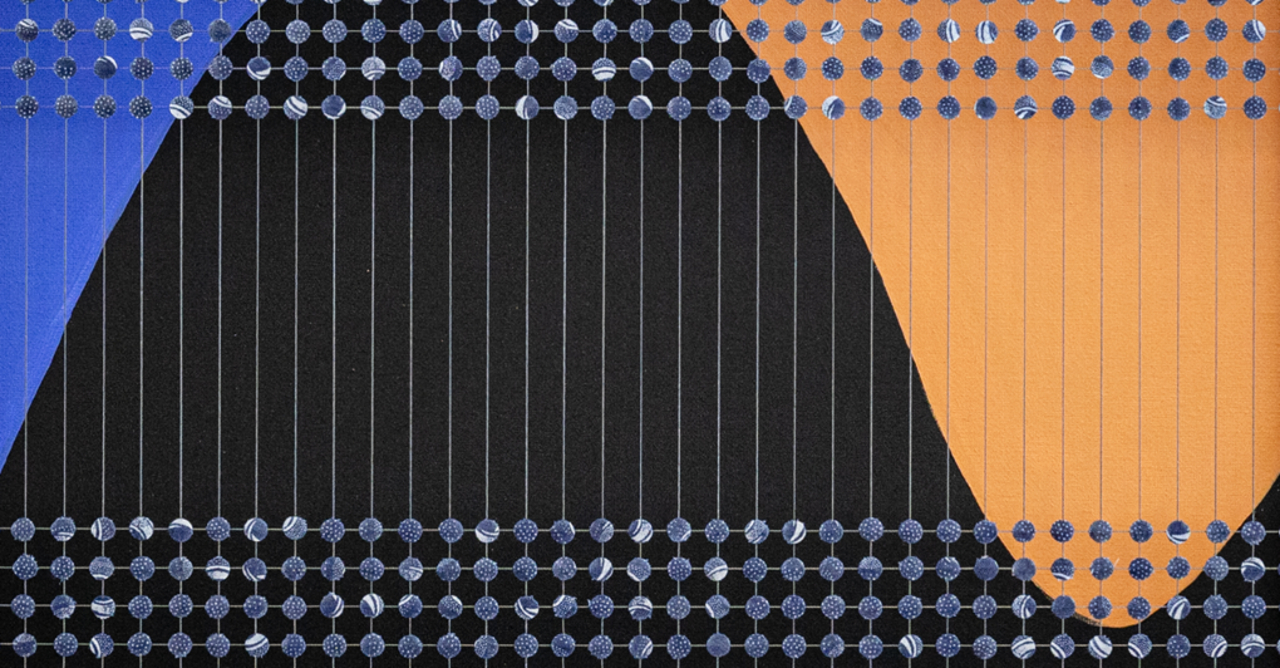
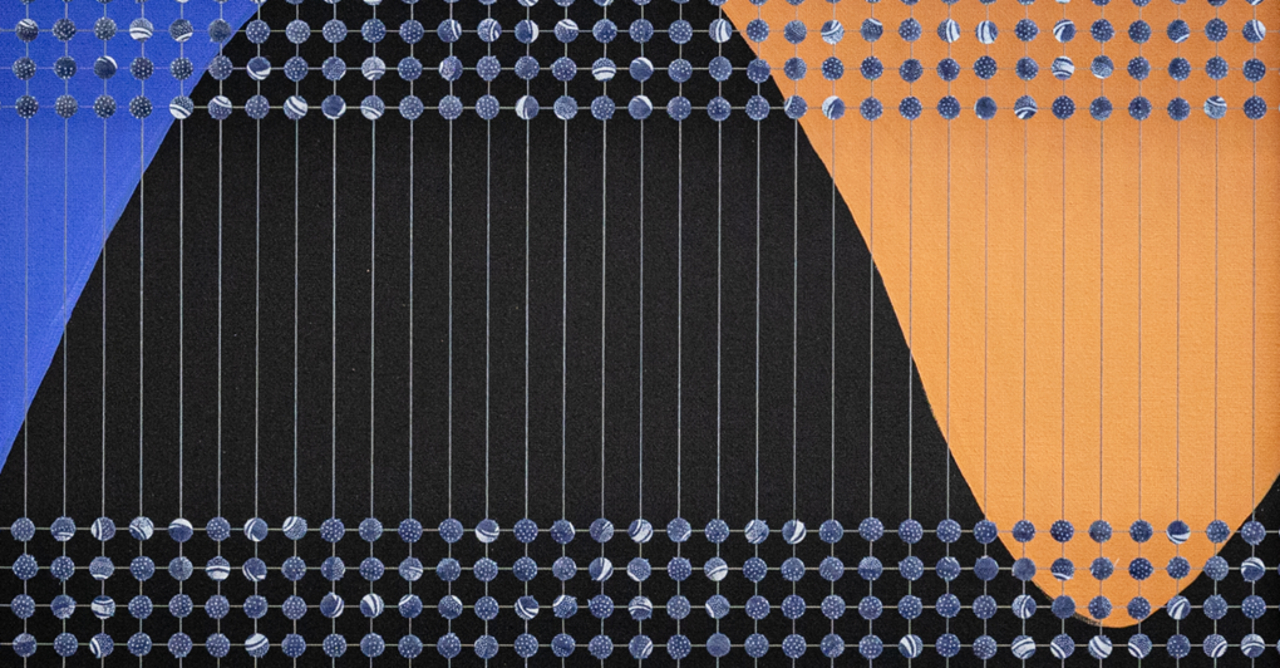
Goodman Gallery is pleased to announce the return of its Seasonal Gallery in Plettenberg Bay, presented this year at Telluric – a new wine estate set against sweeping polo fields, vineyards and the Tsitsikamma mountains. Here, the dramatic beauty of the landscape and the visual intensity of the artworks do not vie for attention; instead, they form a dynamic conversation in which each sharpens the presence of the other.
Following the success of Goodman Gallery’s seasonal projects in Saint-Paul de Vence on the Côte d’Azur this past summer in Europe, the curated art space launched with Cheetah Plains in 2024 and the Hamptons in New York State in 2021, the Plettenberg Bay exhibition extends the gallery’s commitment to innovative, site-responsive presentations. As one of South Africa’s key summer destinations – and a place where the gallery has mounted previous seasonal exhibitions – Plettenberg Bay continues to play an important role in anchoring these interventions close to home.
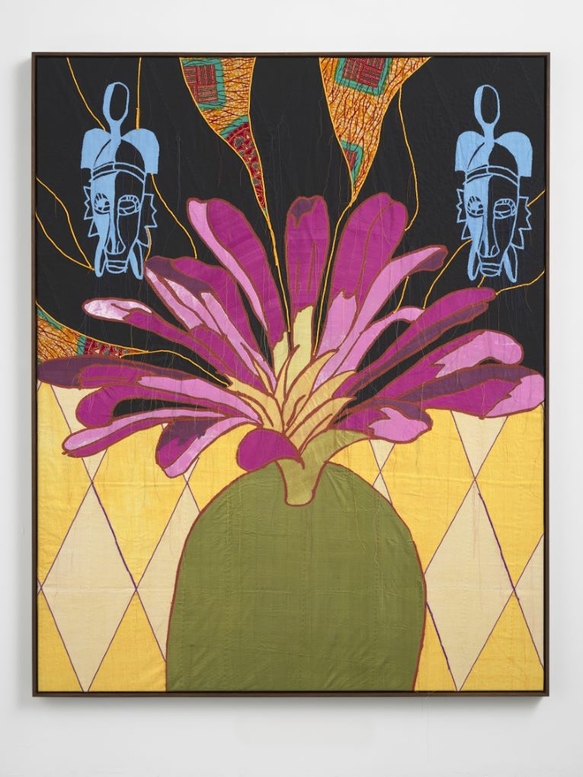
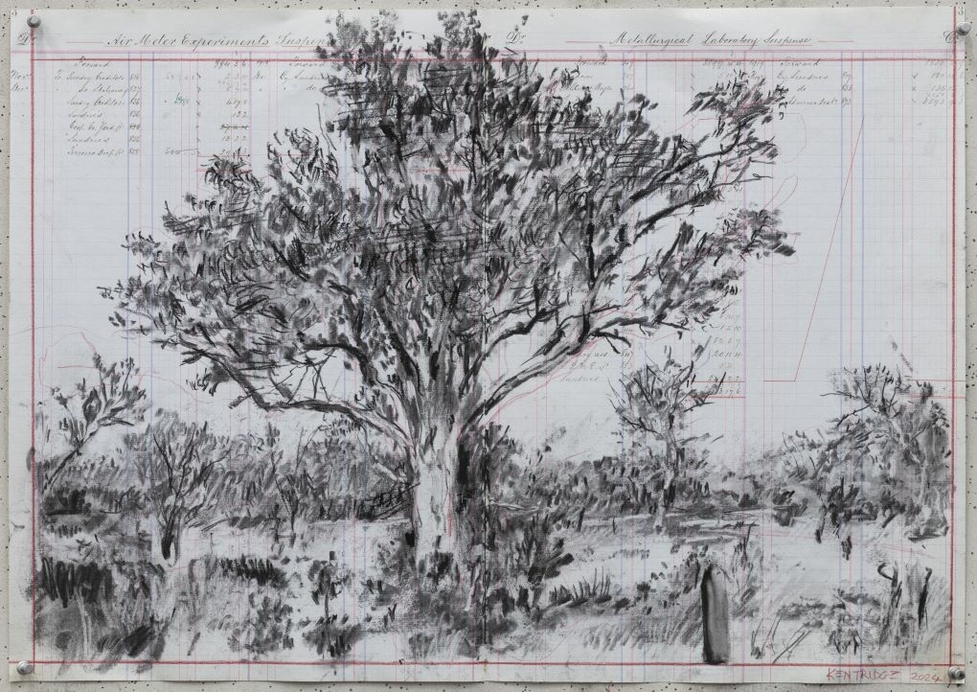
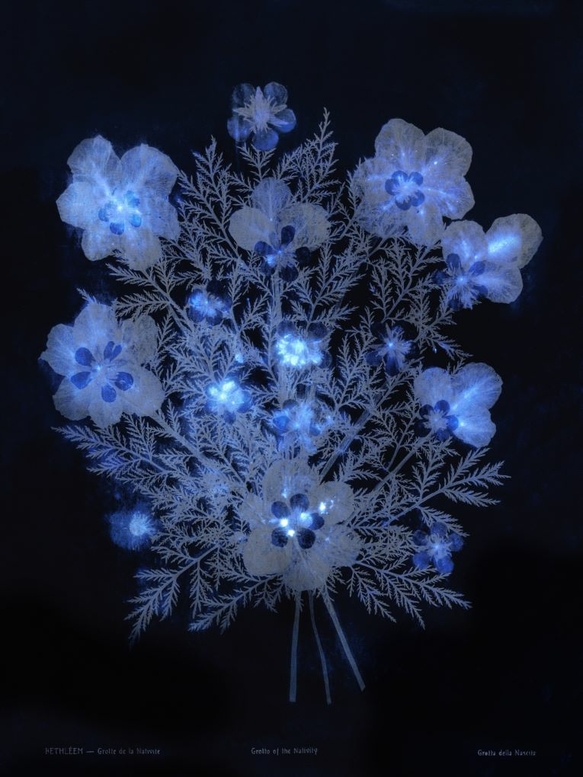
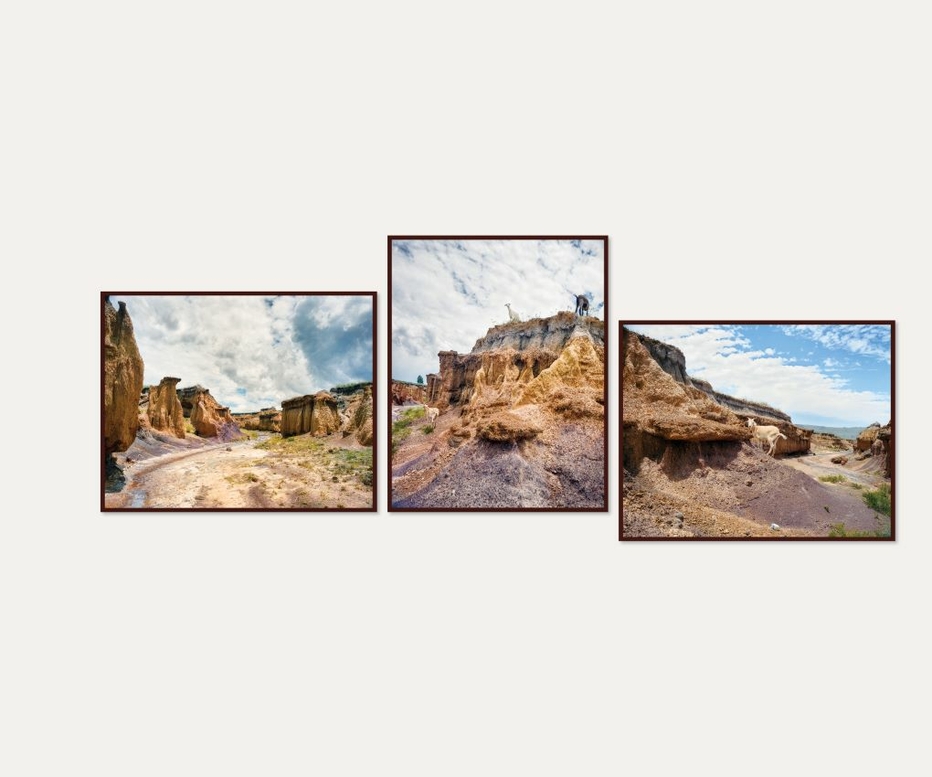
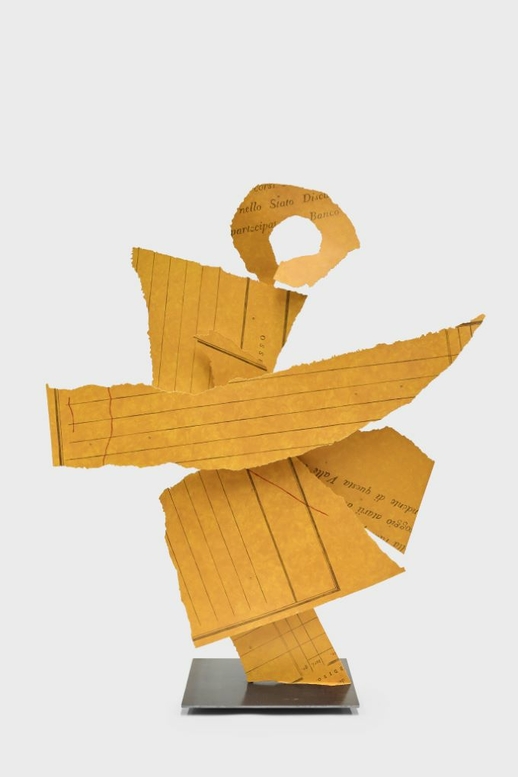
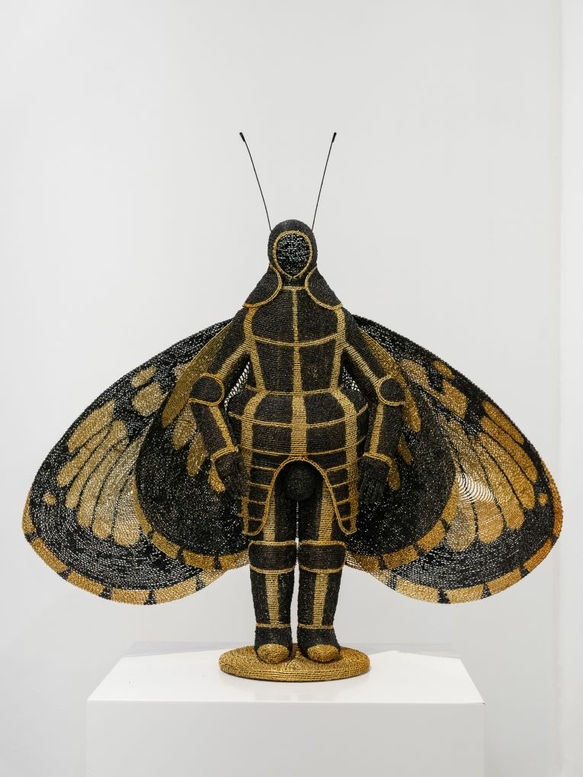
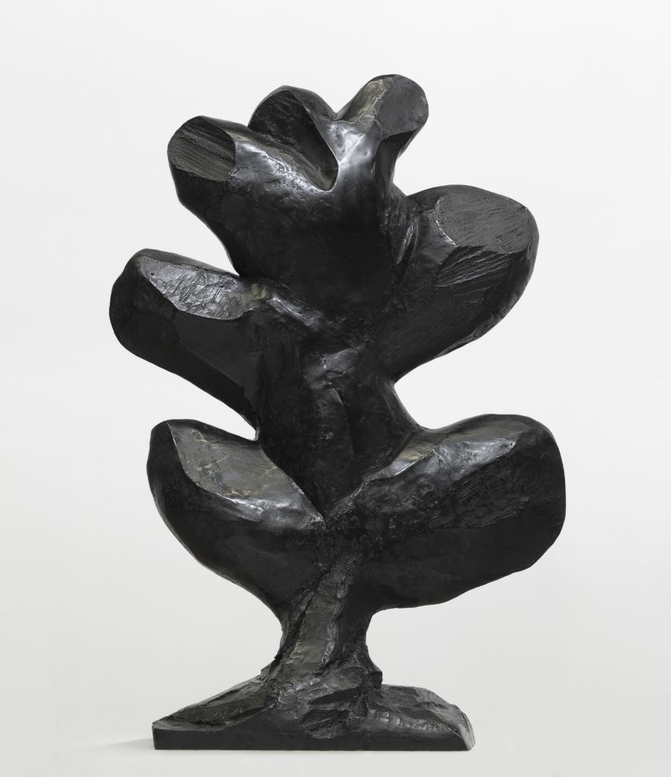
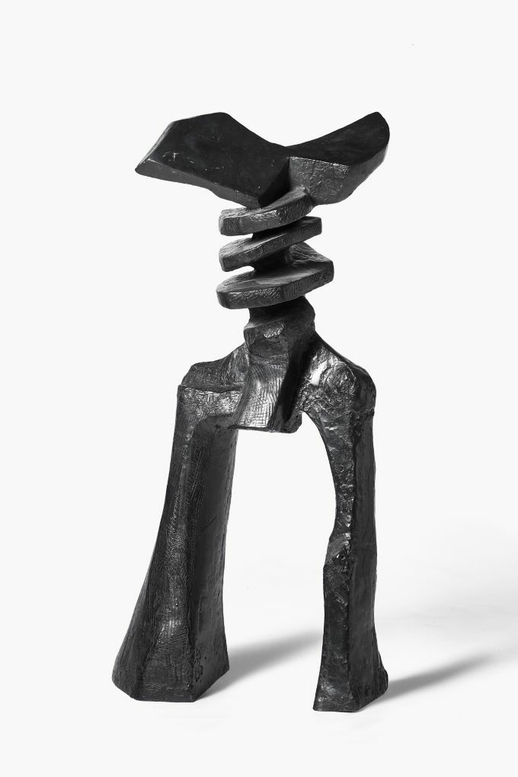
The presentation brings together a wide selection of works from across the Goodman programme, chosen for the ways in which they both echo and diverge from their natural surroundings. Works that resonate directly with the environment include Walter Oltmann’s finely woven insect forms, William Kentridge’s Bushveld Tree (Obelisque) and Yinka Shonibare’s quilt African Flower Magic (Conophytum Smorenskaduense). Lindokuhle Sobekwa’s photographic triptych Inside the Erosion: iNdonga, Tsomo, Eastern Cape expands this engagement with landscape into a deeply personal meditation on place and memory.
Artworks

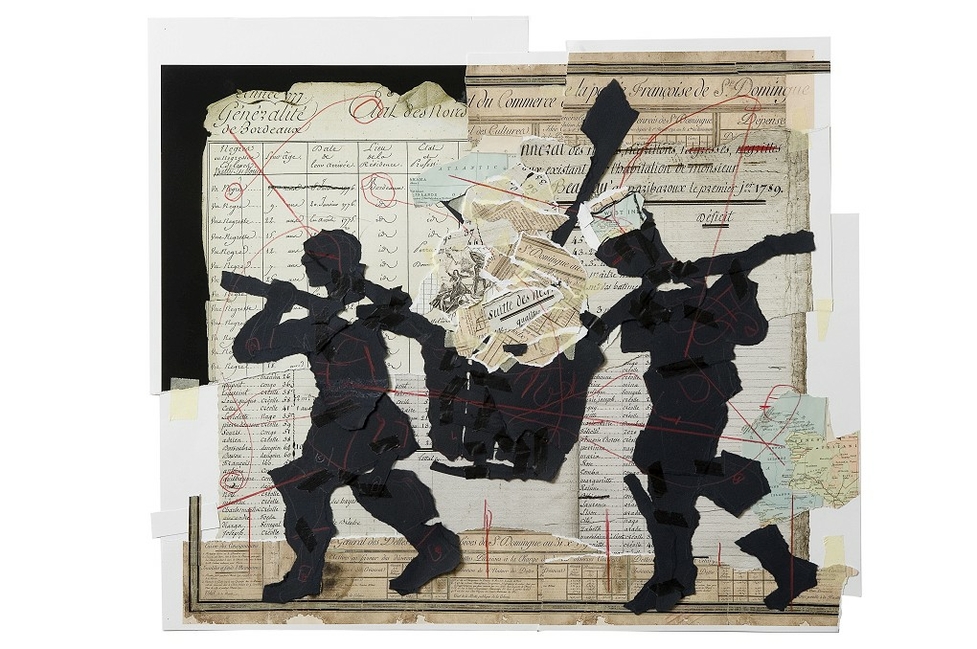
About

Misheck Masamvu
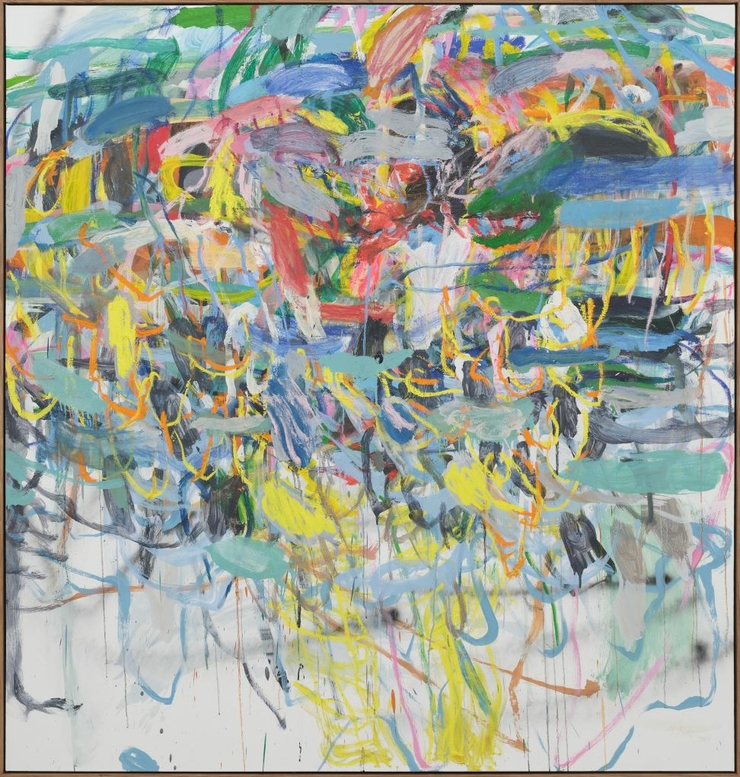
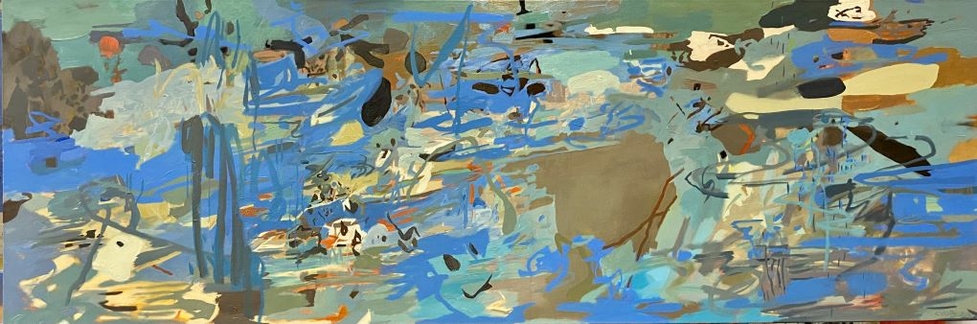
Oscillating between abstraction and figuration, Misheck Masamvu’s (b. 1980, Mutare, Zimbabwe) works allow him to address the past while searching for a way of being in the world. As one of the most significant artists from Zimbabwe, Masamvu’s work offers a renewed understanding of visual culture in Africa and the decolonial project more broadly. Rhythmic lines and layered fields of colour have become a prominent language for Masamvu to explore structures of power and how history comes to bear on the contemporary moment, but also how one can adapt to a new way of interacting with the world.
Selected solo exhibitions: Show me how ruins make a home, A Gentil Carioca, São Paulo (2024); Exit Wounds, Goodman Gallery, New York (2024); Safety Pin, Goodman Gallery, Cape Town (2023); Pivot, Bernier/Eliades Gallery, Brussels (2023); Talk to me while I’m eating, Goodman
Gallery, London, United Kingdom (2021); Hata, Goodman Gallery, Cape Town (2019); Still Still, Goodman Gallery, Cape Town; Misheck Masamvu, Institut Français, Paris, France (2015); Disputed Seats, Influx Contemporary Art, Lisbon, Portugal (2009).
Notable group exhibitions include: Kuvhunura/Kupinda nemwenje mudziva, Fondation Blachere Bonnieux, France (2024); Translations: Afro-Asian Poetics, The Institutum, Singapore (2024); Inside Out, Fondation Gandur pour l’Art, Geneva (2022); Witness: Afro Perspectives, El Espacio 23, Miami, USA (2020); Allied with Power: African and African Diaspora Art from the Jorge M. Pérez Collection, Pérez Art Museum Miami, Miami (2020); Two Together, Zeitz Museum of Contemporary Art Africa, Cape Town (2020); Five Bobh: Painting at the End of an Era, Zeitz MOCAA, Cape Town (2017); Africa 2.0 > is there a Contemporary African art?, Influx Contemporary Art, Lisbon (2010); Art, Migration and Identity,, Africa Museum, Arnhem (2008); and 696 , National Gallery of Zimbabwe, Harare (2008).
Major international exhibitions include: The ‘t’ is silent , 8th Biennial of Painting, Museum Dhondt-Dhaenens, Sint-Martens-Latem, Belgium (2022); STILL ALIVE , 5th Aichi Triennale, Aichi, Japan (2022), NIRIN , 22nd Sydney Biennale, Sydney (2020); Incerteza Viva (Live Uncertainty), the 32nd Bienal de São Paulo (2016) and his international debut at Zimbabwe’s inaugural Pavilion at the 54th Venice Biennale (2011).
Collections include: A4 Arts Foundation (Cape Town, South Africa); Braunsfelder Family Collection (Cologne, Germany); Uieshema Collection (Tokyo, Japan); Perez Art Museum (Miami, USA); Pigozzi Collection (Geneva, Switzerland); Taguchi Art Collection (Tokyo, Japan); Fukutake Foundation (Auckland, New Zealand); COMMA Foundation (Damme, Belgium); ANA Collection (Lagos, Nigeria); Sigg Art Foundation, Le Castellet, France; Fondation Gandur pour l’Art (Geneva, Switzerland); and Zeitz Museum of Contemporary Art Africa (Cape Town, South Africa).
Masamvu lives and works in Harare, Zimbabwe.
Download full CV
Clive van den Berg
Clive van den Berg (b. 1956, Luanshya, Zambia) is a Johannesburg-based artist, curator and designer who has focused on pioneering the insertion of queer perspectives into the larger rewrite of South African history throughout the course of his prolific forty-year career. Van den Berg has produced a range of works spanning a variety of mediums delve into the porous nature of human existence and the landscapes we inhabit, creating a profound commentary on vulnerability, memory, and the intersection of personal and collective histories.
Van den Berg’s retrospective, titled Porous, took place at the Wits Art Museum in August 2024, and was accompanied by a major new book published by Skira.
In his paintings, he delves into the porous nature of land, acting as a vessel for lived experiences and unearthing unresolved layers beneath its surface. Within Van den Berg’s practice, the landscapes serve as a departure point, transcending physicality to evoke a haunting absence that guide viewers through imagined topographies. Van den Berg’s sculptural practice is equally captivating, focusing on the male form and the symbolic resonance of skin to explore themes of vulnerability and exposure. Through this vulnerability, he challenges traditional notions of masculinity and brings to light the ever-present spectre of mortality. His work serves as a poignant meditation on love, loss, and resilience.
His public projects have included the artworks for landmark Northern Cape Legislature and, since he has joined the trace team, museum projects for the Nelson Mandela Foundation, Constitution Hill, Freedom Park, the Workers Museum, The Holocaust and Genocide Centre and many other projects.
Solo exhibitions include: Porous, Wits Art Museum (2024); Remembering, a survey exhibition of paintings, prints and sculptures, Kwa-Zulu Natal Society of Art Gallery, Durban (2021); Personal Affects, Museum of African Art, New York (2005).
Major curated exhibitions include: If You Look Hard Enough, You Can See Our Future: Selections of Contemporary South African Art from the Nando’s Art Collection, The African American Museum of Dallas, Dallas (2023); Breaking Down the Walls: 150 years of Art Collecting, Iziko SANG, Cape Town (2023); Screening of Memorials Without Facts: Men Loving, São Paulo Museum of Art, São Paulo (2018); Earth Matters: Lands as Material and Metaphor in the Arts of Africa, Smithsonian National Museum of African Art, Washington D.C. (2013-2014).
Collections include: El Espacio 23, Miami; Amant Foundation, New York; A4 Arts Foundation, Cape Town; Wits Art Museum, Johannesburg; Spier Arts Trust, London; Iziko South African National Gallery, Cape Town; Smithsonian Museum of African Art, Washington DC and Video Brasil, Sao Paulo.
Van den Berg lives and works in Johannesburg, South Africa.
Download full CV
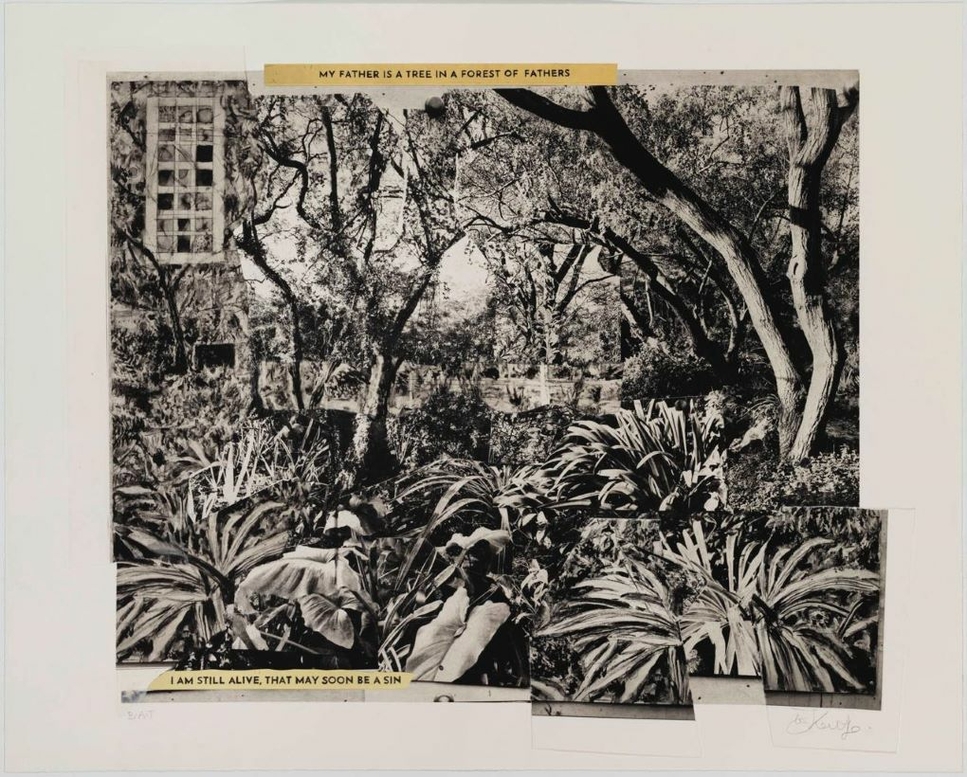
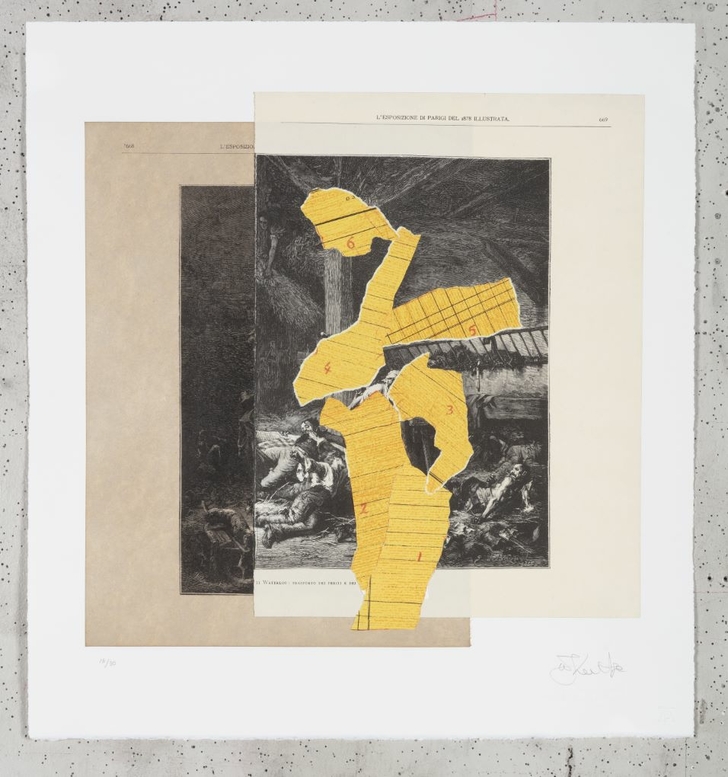
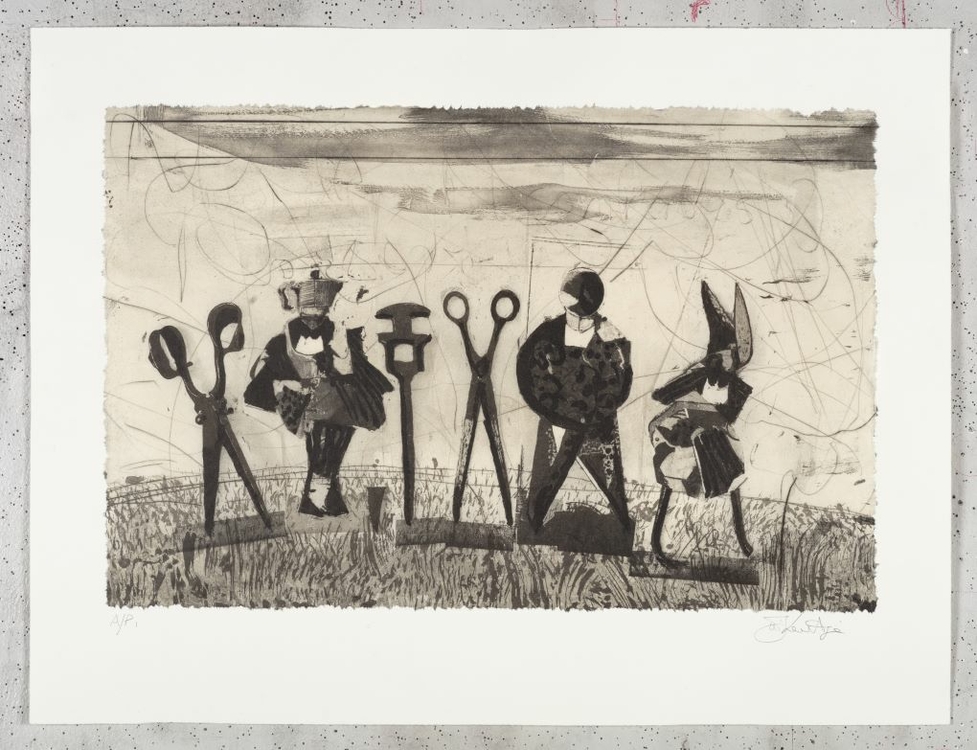
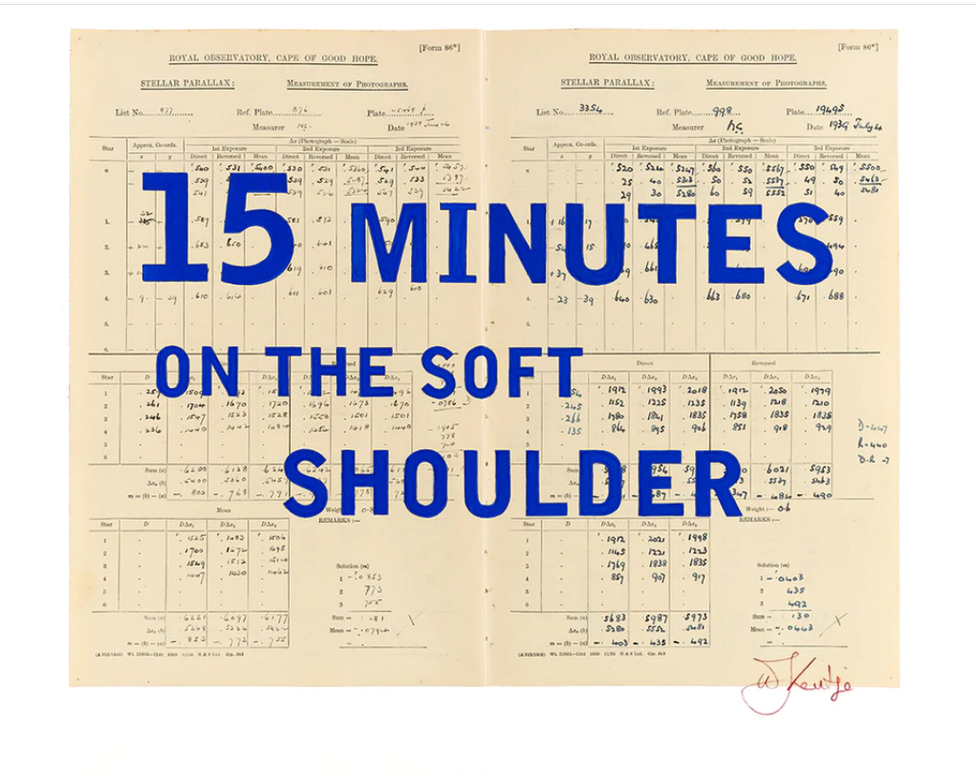
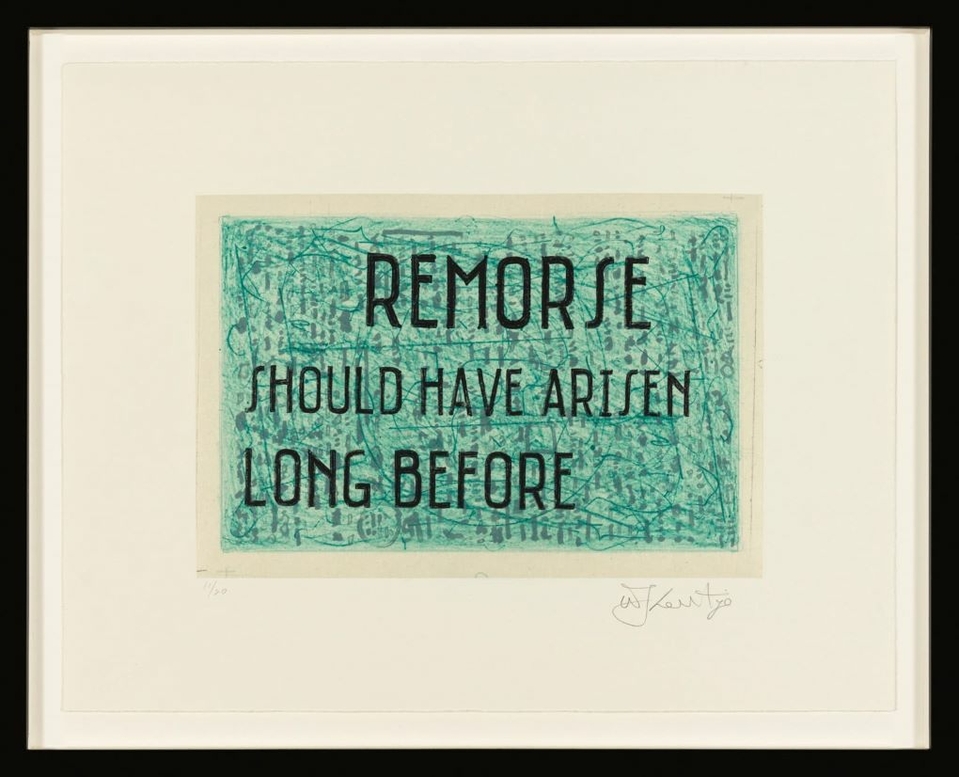
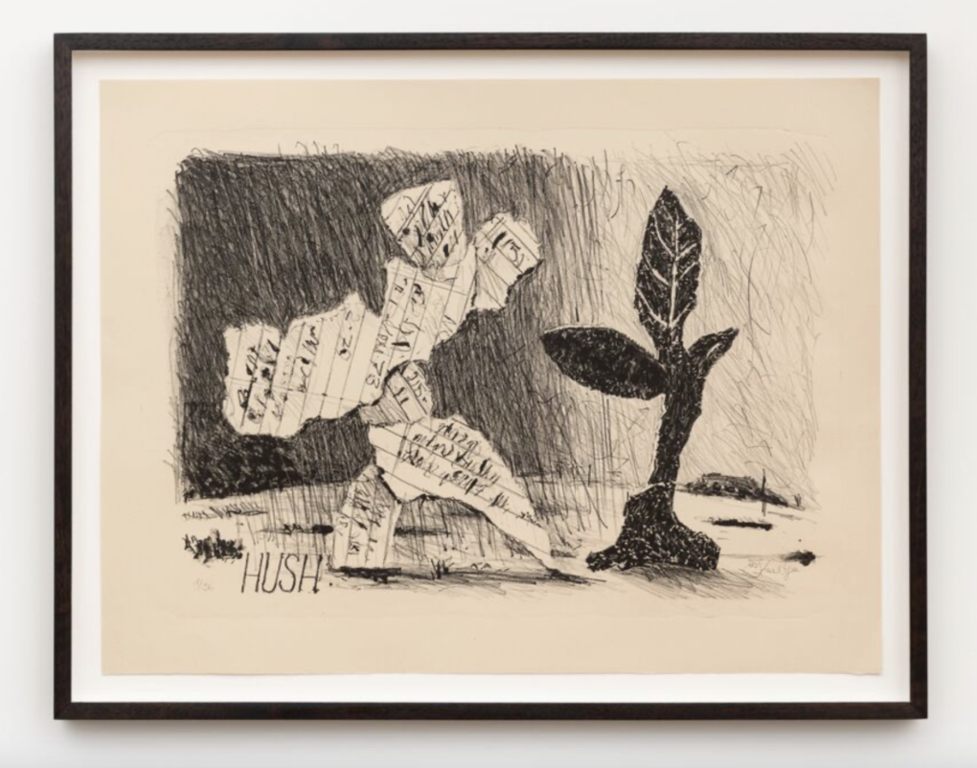
William Kentridge
William Kentridge (b. 1955, Johannesburg, South Africa) is internationally acclaimed for his drawings, films, theatre and opera productions.
In 2024, in Venice, Kentridge premiered a new nine-episode video series, ‘Self-Portriait as a Coffee Pot,’ – a site-specific installation curated by long-time collaborator and curator Carolyn Christov Bakargiev at the Arsenale Institute for Politics of Representation. Following this, in October, MUBI presented: William Kentridge’s, ‘Self-Portrait as a Coffee-Pot’ Premiere in New York.
In conjunction with the world premiere of his newly commissioned opera, ‘The Great Yes, The Great No,’ which debuted at LUMA Arles in July 2024, the solo exhibition, ‘Je n’attends plus’ (I’m Not Waiting Any Longer) presents a collection of major works, some of which had not been seen in Europe before.
Kentridge’s largest UK survey to date was held at the Royal Academy of Arts in London in 2022. An iteration of Kentridge’s Royal Academy survey opened at the Taipei Museum of Fine Arts in May 2024. In the same year Kentridge opened another major survey exhibition, ‘In Praise of Shadows,’ at The Broad, Los Angeles. In 2023, this exhibition traveled to the Museum of Fine Arts, Houston.
Kentridge’s work has been seen in museums across the globe since the 1990s, including the Luma Foundation, France (2024); Arsenale Institute for Politics of Representation, Venice (2024); Taipei Fine Arts Museum (2024); Museum of Modern Art, New York (1999, 2005, 2010); Albertina Museum, Vienna (2010); Musée du Louvre, Paris (2010); National Museum of Modern and Contemporary Art, Korea; Reina Sofia Museum, Madrid (2015); Kunstmuseum Basel (2019); Norval Foundation, Cape Town (2019). The artist has also participated in biennale’s including Documenta in Kassel (2012, 2002, 1997) and the Venice Biennale (2015, 2013, 2005, 1999, 1993).
Collections include: MoMA, New York; Tate Modern, London; Centre Pompidou, Paris; Haus der Kunst, Munich; Sharjah Art Foundation, Sharjah; National Museum of Modern Art, Kyoto; Guggenheim, Abu Dhabi and Zeitz MoCAA, Cape Town.
Kentridge lives and works in Johannesburg, South Africa.
Download full CV
David Koloane
David Koloane (1938 – 2019) was born in Alexandra, Johannesburg, South Africa. Koloane spent his career making the world a more hospitable place for black artists during and after apartheid. Koloane achieved this through his pioneering work as an artist, writer, curator, teacher and mentor to young and established artists at a time when such vocations were restricted to white people in South Africa. A large part of this effort involved the initiatives Koloane helped establish, from the first Black Art Gallery in 1977, the Thupelo experimental workshop in 1985 and the Bag Factory Artists’ Studios in 1991, where he served as director for many years. Koloane also tutored at the Federated Union of Black Artists (FUBA) in 1979 and became the head of the fine art section and gallery from 1985 to 1990.
Through his expressive, evocative and poetic artwork, Koloane interrogated the socio-political and existential human condition, using Johannesburg as his primary subject matter. Koloane’s representations of Johannesburg are populated with images of cityscapes, townships, street life, jazz musicians, traffic jams, migration, refugees, dogs, and birds among others. Imaginatively treated, through the medium of painting, drawing, assemblage, printmaking and mixed media, Koloane’s scenes are a blend of exuberant and sombre, discernible and opaque pictorial narratives.
Koloane’s work has been widely exhibited locally and internationally. In 1999 he was part of the group exhibition _Liberated Voices_ at the National Museum of African Art in Washington DC. In 2013, Koloane’s work was shown on the South African pavilion at the 55th la Biennale di Venezia and on the group exhibition _My Joburg_ at La Maison Rouge in Paris. In 1998, the government of the Netherlands honoured Koloane with the Prince Claus Fund Award for his contributions to South African art. Koloane was also awarded an Honorary Doctorate twice, once from Wits University in 2012, and again from Rhodes University in 2015. In 2019 Koloane was the subject of a travelling career survey exhibition, _A Resilient Visionary: Poetic Expressions of David Koloane_, which opened at IZIKO SANG and later travelled to Standard Bank Gallery and Wits Art Museum in October.
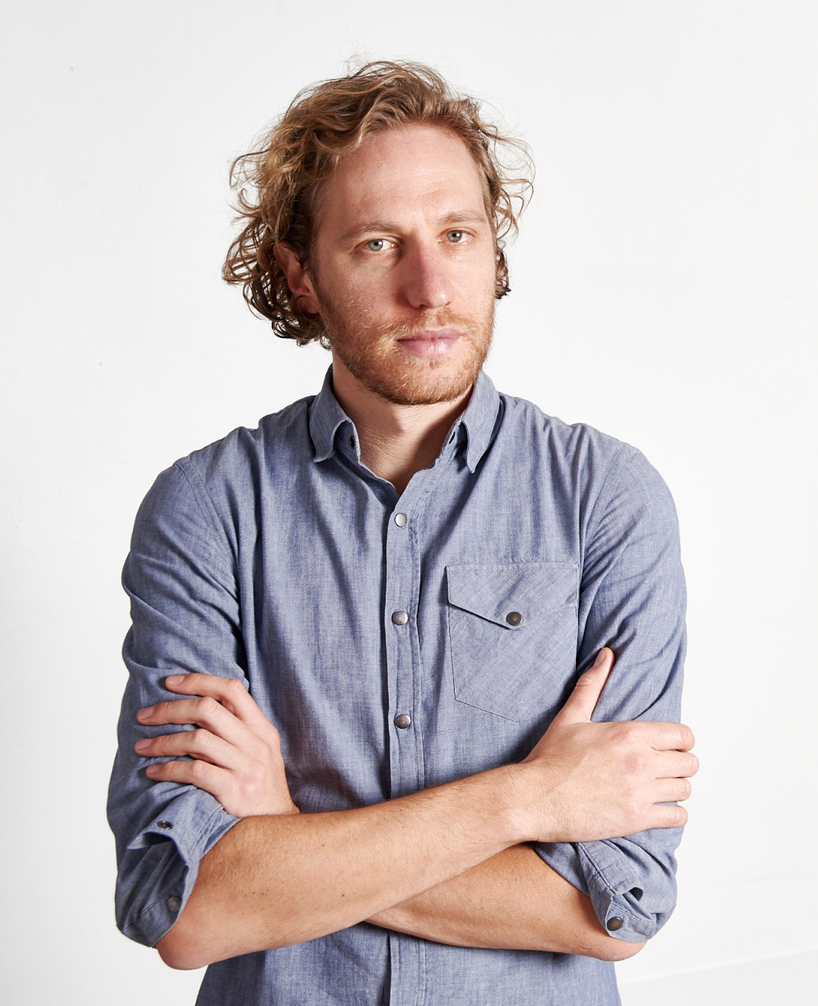
Mikhael Subotzky
Mikhael Subotzky’s (b. 1981, Cape Town) works are the results of his fractured attempts to place himself in relation to the social, historical, and political narratives that surround him. As an artist working in film, video installation and photography, as well as more recently in collage and painting, Subotzky engages critically with contemporary politics of images and their making. “At the heart of my work is a fixation with revealing the gap between what is presented (and idealised) and what is hidden, coupled with a desire to pull apart and reassemble the schizophrenia of contemporary existence,” he says.
Subotzky’s first body of photographic work, Die Vier Hoeke (The Four Corners), was an in-depth study of the South African penal system. Umjiegwana (The Outside) and Beaufort West extended this investigation to the relationship between everyday life in post-apartheid South Africa and the historical, spatial, and institutional structures of control. Retinal Shift was produced by Subotzky on the occasion of the Standard Bank Young Artist Award 2012 and toured South Africa’s major museums and critically engaged with his ambivalence towards the processes of representation and image construction. Ponte City, a collaboration with artist Patrick Waterhouse, focuses on a single 54-story building that dominates the Johannesburg skyline. The building is cast as the central character in a myriad of interweaving narratives that, through photographs, commissioned texts, historical documents, and urban myths, chart the convoluted histories of both the building and Johannesburg itself. The Ponte City exhibition, which consists of a single installation of thousands of photographs and documents, has been acquired by the San Francisco Museum of Modern Art and the accompanying publication won the 2015 Deutsche Borse Photography Prize.
Subotzky’s work has been exhibited in recent museum presentations The Struggle of Memory at Palais Populaire, Berlin (2024) and Fragile Beauty: Photographs from the Sir Elton John and David Furnish Collection at Victoria & Albert Museum, London (2024).
Notable solo and two-person exhibitions include Home Building Ideas for South Africa (or A Cape Town Landscape), Goodman Gallery Cape Town (2024); Epilogue, Goodman Gallery, London (2022); Tell It To The Mountains, (with Lindokuhle Sobekwa) A4 Foundation, Cape Town (2021); Mikhael Subotzky: WYE, Sherman Contemporary Art Foundation, Sydney (2016); Ponte City (with Patrick Waterhouse), National Galleries, Scotland, UK, then travelled to Le Bal, Paris and FOMU, Antwerp (2014).
His work was included in the 12th Cairo Biennale (2010), The Unexpected Guest, Liverpool Biennial (2012), Rencontres Picha Biennale de Lubumbashi, Lubumbashi (2013) and the 56th Venice Biennale: All the World’s Futures, Venice (2015).
Public collections include Museum of Modern Art, New York; Solomon R Guggenheim Museum, New York; the National Gallery of Art, Washington; Tate, London; Centre Pompidou, Paris; and the South African National Gallery, among others.
Subotzky lives and works in Johannesburg, South Africa.
Download full CV
Sue Williamson
Sue Williamson (b. 1941, Lichfield, UK) is one of South Africa’s most important contemporary artists. In the 1970s, Williamson started to make work which addressed social change and by the late 1980s she was well known for her series of portraits of women involved in the country’s political struggle, titled A Few South Africans (1980s).
In 2025, a major retrospective of her five-decades long career, titled There’s something I must tell you, will be shown at the Iziko South African National Gallery, following her UK and US institutional exhibitions in 2023 at The Box, Plymouth and The Barnes Foundation, Philadelphia.
In 1997, Williamson founded www.artthrob.co.za, a leading website on South African contemporary art and the first of its kind in the country. Williamson has also authored two major publications - South African Art Now (2009) and Resistance Art in South Africa (1989).
Williamson has participated in biennales around the world, including the Kochi Muziris Biennale (2019); several Havana Biennales as well as Sydney, Istanbul, Venice and Johannesburg biennales.
Major international solo exhibitions include: Between Memory and Forgetting, The Box, Plymouth, UK (2023); Other Voices, Other Cities, Las Palmas (2023); Can’t Remember, Can’t Forget, Apartheid Museum, Johannesburg (2017); Other Voices, Other Cities, SCAD Museum of Art, Georgia (2015), Messages from the Moat, Den Haag, (2003) and The Last Supper Revisited, National Museum of African Art, Smithsonian Institute, Washington D.C. (2002).
Group exhibitions include: Tell Me What You Remember, Barnes Foundation (2023); Breaking Down the Walls – 150 years of Collecting Art at Iziko, Iziko South African Museum (2022); RESIST! The 1960s Protests, Photography and Visual Legacy, BOZAR Centre for Fine Arts, Brussels (2018); Women House, La Monnaie de Paris and National Museum for Women in the Arts (Washington D.C) (2017, 2018); Being There, Fondation Louis Vuitton, Paris (2017); Rise and Fall of Apartheid: Photography and the Bureaucracy of Everyday Life, International Centre for Photography in New York and the Museum Africa in Johannesburg (2014); The Short Century, Museum Villa Stuck, Munich, House of World Cultures, Berlin, Museum of Contemporary Art, Chicago, and P.S.1 New York (2001-2).
Collections include: the Museum of Modern Art, New York; Tate Modern, London; Victoria & Albert Museum, London; Pompidou Centre, Paris; Hammer Museum, Los Angeles; the National Museum of African Art, Smithsonian Institution, Washington D.C; Iziko South African National Gallery, Cape Town and the Johannesburg Art Gallery, Johannesburg. Williamson has authored two books – ‘South African Art Now’ (2009) and ‘Resistance Art in South Africa’ (1989).
Awards and fellowships include: The Living Legends Award (2020), attributed by the South African government’s Department of Sports, Arts and Culture; the University of Johannesburg’s Ellen Kuzwayo Award (2018); the Rockefeller Foundation’s Bellagio Creative Arts Fellowship (2011); the Smithsonian’s Visual Artist Research Award Fellowship (2007) and the Lucas Artists Residency Fellowship (2005) from Montalvo Art Center in California.
Williamson lives and works in Cape Town, South Africa.
Download full CV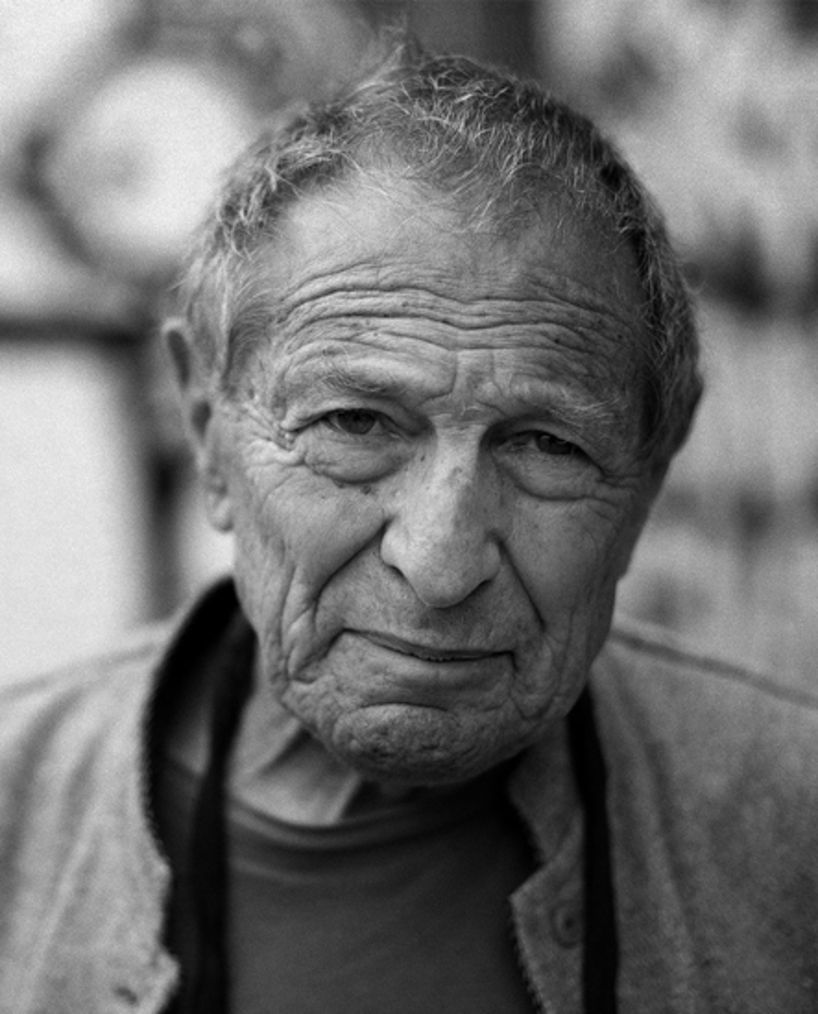
David Goldblatt
David Goldblatt (1930 – 2018) was born in Randfontein, a small mining town outside of Johannesburg, South Africa. Through his lens, South African he chronicled the structures, people and landscapes of South Africa from 1948 until his death in June 2018. Well known for his photography which explored both public and private life in South Africa, Goldblatt created a body of powerful images which depicted life during the time of Apartheid. Goldblatt also extensively photographed colonial era monuments and buildings with the idea that the architecture reveals something about the people who built them.
In particular, Goldblatt documented the people, landscapes and industry of the Witwatersrand, the resource-rich area in which he grew up and lived, where the local economy was based chiefly on mining. Equal parts artist and documentarian, Goldblatt was known for his practice of attaching extensive captions to his photographs, which almost always identify the subject, place, and time in which the image was taken. These titles often play a vital role in exposing the visible and invisible forces through which the country’s policies of extreme racism and segregation shaped the dynamics of life, especially along axes of gender, labor, identity, and freedom of movement. Beyond endowing his images with documentary power, Goldblatt’s titles also dignify the people and places he photographs.
In 1989, Goldblatt founded the Market Photography Workshop, a training institution in Johannesburg, for aspiring photographers. In 1998 he was the first South African to have a solo exhibition at the Museum of Modern Art in New York. The Goldblatt Archive is held by Yale University, in New Haven, Connecticut.
In 2001, a retrospective of his work, ‘David Goldblatt Fifty-One Years’ began a tour of galleries and museums. He was one of the few South African artists to exhibit at Documenta 11 (2002) and Documenta 12 (2007) in Kassel, Germany. A more recent retrospective includes, ‘David Goldblatt: No Ulterior Motive at the AIC’ (2018), which is now touring. This major traveling retrospective exhibition spans the seven decades of this South African photographer’s career, from the 1950s to the 2010s, demonstrating Goldblatt’s commitment to showing the realities of daily life in his country. The exhibition and accompanying publication bring together roughly 150 works by Goldblatt from the collections of the Yale University Art Gallery and the Art Institute of Chicago—two major Goldblatt repositories—including his early black-and-white photography and his post-apartheid, large-format color photography.
Goldblatt was the recipient of the 2006 Hasselblad award, the 2009 Henri Cartier-Bresson Award, the 2013 ICP Infinity Award and in 2016, he was awarded the Commandeur des Arts et des Lettres by the Ministry of Culture of France.
Other notable group exhibitions and biennales include: ILLUMInations at the 54th Venice Biennale in 2011, South Africa in Apartheid and After, San Francisco Museum of Modern Art (2013); Everything Was Moving: Photography from the 60s and 70s, Barbican Centre, London (2012). He also exhibited at the Jewish Museum (2010); and the New Museum (2009), both in New York.
Selected key collections include: Museum of Modern Art (MoMA), New York; Metropolitan Museum of Art, New York; San Francisco Museum of Modern Art (SFMOMA); Tate Modern, London; Victoria and Albert Museum, London; Centre Pompidou, Paris; The J. Paul Getty; Museum, Los Angeles; National Gallery of Art, Washington, D.C.; Art Institute of Chicago; The Israel Museum, Jerusalem; Huis Marseille, Museum for Photography, Amsterdam; The Museum of Fine Arts, Houston; The Nelson-Atkins Museum of Art, Kansas City; The Walther Collection, Neu-Ulm, Germany and New York; National Gallery of Australia, Canberra; Stedelijk Museum, Amsterdam; Fotomuseum Winterthur, Switzerland; Yale University Art Gallery, New Haven; Johannesburg Art Gallery, South Africa; Iziko South African National Gallery, Cape Town; Art Gallery of New South Wales, Sydney; Princeton University Art Museum, Princeton; Moderna Museet, Stockholm; Museum Folkwang, Essen; Musée de l’Élysée, Lausanne; Carnegie Museum of Art, Pittsburgh; Museo Nacional Centro de Arte Reina Sofía, Madrid; Los Angeles County Museum of Art, Los Angeles.
Download full CV
Sam Nhlengethwa
Sam Nhlengethwa (b. 1955, Payneville, Springs) part of a pioneering generation of late 20th century South African artists whose work reflects the sociopolitical history and everyday life of their country. Through his paintings, collages and prints Nhlengethwa has depicted the evolution of Johannesburg through street life, interiors, jazz musicians and fashion.
Nhlengethwa was born in the Black township community of Payneville near Springs (a satellite mining town east of Johannesburg), in 1955 and grew up in Ratanda location in nearby Heidelberg. In the 1980s, he moved to Johannesburg where he honed his practice at the renowned Johannesburg Art Foundation under its founder Bill Ainslie. Nhlengethwa is one of the founders of the legendary Bag Factory, in Newtown, in the heart of the Johannesburg CBD, where he used to share studio space with fellow greats of this pioneering generation of South African artists, such as David Koloane and Pat Mautloa.
In 2014, a major survey exhibition, titled ‘Life, Jazz and Lots of Other Things,’ was hosted by SCAD Museum of Art in Savannah, Georgia, which was then co-hosted in Atlanta by SCAD and the Carter Center.
Nhlengethwa’s practice features in important arts publications, such as Phaidon’s The 20th Century Art Book (2001).
Other notable exhibitions and accolades in South Africa and around the world include: in 1994 – the year South Africa held its first democratic elections – Nhlengethwa was awarded the prestigious Standard Bank Young Artist of the Year award; in 1995, his work was included in the Whitechapel Gallery’s ‘Seven Stories About Modern Art in Africa’ in London; in 2000, he participated in a two-man show at Seippel Art Gallery in Cologne.
Group exhibitions include: ‘Constructions: Contemporary Art from South Africa,’ Museu de Arte Contemporanea de Niteroi, Brazil (2011); ‘Beyond Borders: Global Africa,’ University of Michigan Museum of Art, Michigan (2018).
Biennales include: 6th Beijing Biennale in (2015); 55th Venice Biennale, as part of the South African Pavilion, titled Imaginary Fact: Contemporary South African Art and the Archive (2013); 12th International Cairo Biennale (2010); 8th Havana Biennale (2003); Southern African Stories: A Print Collection, CCA (Caribbean Contemporary Arts), Trinidad (2002).
Collections include: Johannesburg Art Gallery (JAG), Durban Art Gallery (DAG), Iziko South African National Art Gallery (ISANG), Standard Bank’s Head Office, Absa, Botswana Art Museum, Museum of Fine Arts Houston, amongst many in South Africa and abroad.
Nhlengethwa lives and works in Johannesburg, South Africa.
Download full CV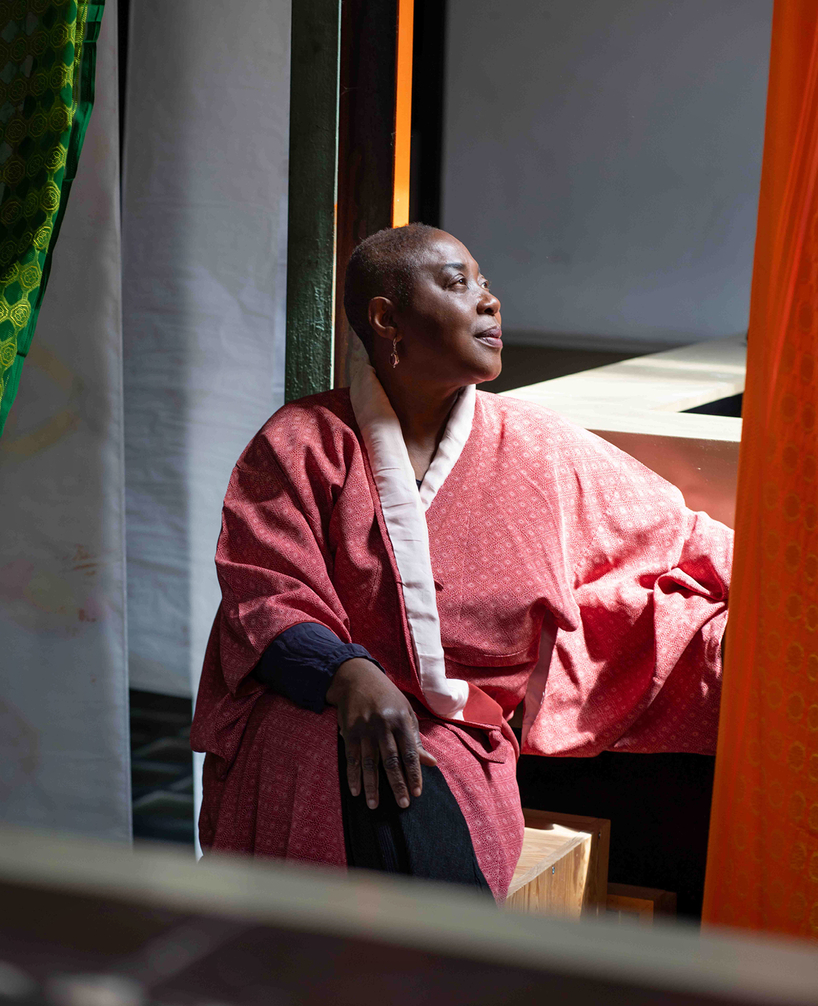
Pélagie Gbaguidi
Pélagie Gbaguidi (b. 1965, Dakar, Senegal), describes herself as a contemporary ‘griot’ – a West African storyteller – which she defines as someone who functions as an intermediary between individual memory and ancestral past. Her work is an anthology of the signs and traces of trauma and is centred on colonial and postcolonial history. She recontextualises archives and official histories to reveal processes of forgetting. The materially embodied images created by Gbaguidi through painting, drawing, performance and installation seek to break out of binary thinking, archetypes and simplifications.
Biennales and major international exhibitions include: Berlin Biennale (2020), Lubumbashi Biennale (2019), Dakar Biennale (2004, 2006, 2008, 2014 and 2018) and documenta 14 (2017). Her work has featured in group shows at Centre Pompidou-Metz, WIELS (Brussels), Musée Rochechouart, Middelheimmuseum (Antwerp), Stadtmuseum (Munich), MMK (Frankfurt), and the National Museum of African Art – Smithsonian Institution (Washington, D.C.).
Collections include: Artothèque, Saint-Denis, Réunion, France; Casa África, Las Palmas de Gran Canaria, Spain; CNAP Centre National des Arts Plastiques, Paris, France; Holocaust Memorial Foundation, Chicago, United States of America; KANAL-Centre Pompidou, Brussels, Belgium; Kunstmuseum Basel, Kupferstichkabinett, permanent loan from the Hüni-Michel-Stiftung, Basel, Switzerland; M HKA Museum of Contemporary Art / City of Antwerp, Antwerp, Belgium; Memorial ACTe, Pointe-à-Pitre, Guadeloupe, France; and the Mu.ZEE, Ostend, Belgium
S.M.A.K. Municipal Museum of Contemporary Art, Ghent, Belgium
Gbaguidi lives and works in Brussels.
Download full CV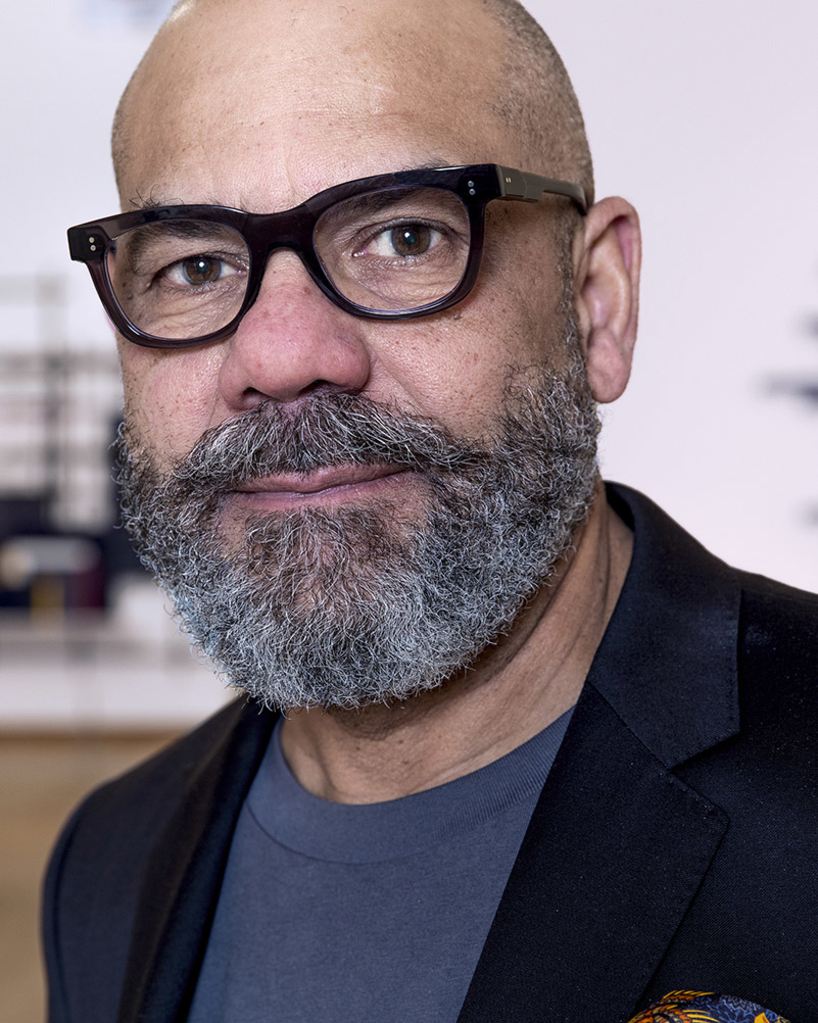
Remy Jungerman
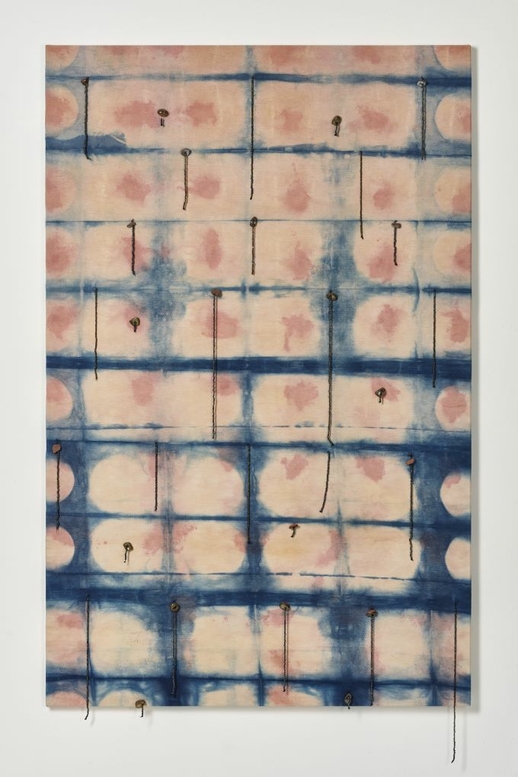
Remy Jungerman (b. 1959, Moengo, Suriname) explores the intersection of pattern and symbol in Surinamese Maroon culture, the larger African diaspora, and 20th century Modernism. Placing fragments of Maroon textiles and other materials found in the African diaspora—the kaolin clay used in several religious traditions or the nails featured in Nkisi Nkondi power sculpture—in direct contact with materials and imagery drawn from more “established” art traditions, Jungerman presents a peripheral vision that enriches our perspective on art history.
In 2022 , Jungerman received the A.H. Heineken Prize for Art, the biggest visual art prize in the Netherlands. From November 20, 2021 – April 10, 2022 he was the subject of a career survey show at the Stedelijk Museum, Amsterdam, titled Remy Jungerman: Behind the Forest. In 2019, he represented the Netherlands at the 58th Venice Biennale. In 2017 he was nominated for the Black Achievement Award in The Netherlands. In 2008, he received the Fritschy Culture Award from the Museum het Domein, Sittard, The Netherlands.
Jungerman is co-founder and curator of the Wakaman Project, drawing Lines – connecting dots. Wakaman, which means “walking man,” was born out of a desire to examine the position of visual artists of Surinamese origin and to raise their profile(s) on the international stage. His first book, Remy Jungerman. Where the River Runs, published by Jap Sam Books in 2019, won the 2019 50books | 50covers design award from the AIGA in the US and has received two 2019 30 Best Dutch Book Designs awards (as per a student jury from the Gerrit Rietveld Academy, Amsterdam).
Institutional exhibitions and biennales include: Remy Jungerman: Behind the Forest, Stedelijk Museum, Amsterdam (2021-2022); Mondrian Moves, Kunstmuseum, The Hague, Netherlands (2022); 58th Venice Biennial, Dutch Pavilion, Venice (2019); KABRA. Descendants Exchange, Kunstverenging Diepenheim, Netherlands (2013); Infinite Island: Contemporary Caribbean Art, Brooklyn Museum, New York (2007).
Group exhibitions include: Spirit Levels, CCA Glasgow, Scotland (2014); Who More Sci-Fi Than Us?, Kunsthal KAdE, Amersfoort, Netherlands (2012); Positions, De Hal, Paramaribo, Suriname (2011).
Solo exhibitions include: Still Waters, Goodman Gallery Johannesburg (2024); Fault Lines, Goodman Gallery, London (2022).
Jungerman lives and works between Amsterdam and New York
Download full CV
Dor Guez
Dor Guez Munayer’s (b. Jerusalem) practice comprises photography, video, installations, and sculpture. Through multimedia performances, Guez transforms art into a vehicle for storytelling. During a recent performance at the Centre Pompidou in Paris, he examined multi-colonial projections looking at different historical resources. His latest overview, “Catastrophe,” at the Museum of Modern Art in Bogotá in 2022, spanned a wide range of works that reflect the artist’s engagement with his communities and the ever-evolving studies of the Mediterranean Basin.
Guez’s work has been displayed in solo exhibitions at the Laboratorio Arte Alameda, Mexico City (2023); Felix Nussbaum Museum, Osnabrück (2023); MAMBO: Museum of Modern Art, Bogota (2022); Kunst im Kreuzgang, Bielefeld (2021); Futura Gallery, Prague, (2020); American Colony Archive, Jerusalem (2019); MAN Museum, Nuoro (2018); the Museum for Islamic Art, Jerusalem (2017); the Museum of Contemporary Art, Detroit (2016); the Institute of Contemporary Arts, London (2015) the Rose Art Museum, Brandeis University, Massachusetts (2013); The Mosaic Rooms, A.M Qattan Foundation, Centre for Contemporary Arab Culture & Art, London (2013) and the KW Institute for Contemporary Art, Berlin (2010).
Guez’s works are included in public collections such as Tate Modern London, Center Pompidou Paris, Guggenheim Abu Dhabi, LACMA; Los Angeles County Museum of Art, Princeton University Art Museum, The Jewish Museum New York, Rose Art Museum, FRAC collection Marseille, Museum of Modern Art Bogota, and more.
Dor Guez Munayer lives and works between Jaffa and Athens.
Download full CV
Hank Willis Thomas
Hank Willis Thomas (b. 1976, New Jersey, United States) is a conceptual artist working primarily with themes related to perspective, identity, commodity, media, and popular culture.
Thomas has exhibited throughout the United States and abroad including the International Center of Photography, New York; Guggenheim Museum Bilbao, Spain; Musée du quai Branly, Paris; Hong Kong Arts Centre, Hong Kong, and the Witte de With Center for Contemporary Art, Netherlands.
Thomas’ work is included in numerous public collections including the Museum of Modern Art, New York; Solomon R. Guggenheim Museum, New York; Whitney Museum of American Art, New York; Brooklyn Museum, New York; High Museum of Art, Atlanta, and National Gallery of Art, Washington D.C.
His collaborative projects include Question Bridge: Black Males, In Search Of The Truth (The Truth Booth), Writing on the Wall, and the artist-run initiative for art and civic engagement For Freedoms, which in 2017 was awarded the ICP Infinity Award for New Media and Online Platform. Thomas is also the recipient of the Gordon Parks Foundation Fellowship (2019), the Guggenheim Foundation Fellowship (2018), Art for Justice Grant (2018), AIMIA | AGO Photography Prize (2017), Soros Equality Fellowship (2017), and is a member of the New York City Public Design Commission. Thomas holds a B.F.A. from New York University (1998) and an M.A./M.F.A. from the California College of the Arts (2004). In 2017, he received honorary doctorates from the Maryland Institute of Art and the Institute for Doctoral Studies in the Visual Arts.
Download full CV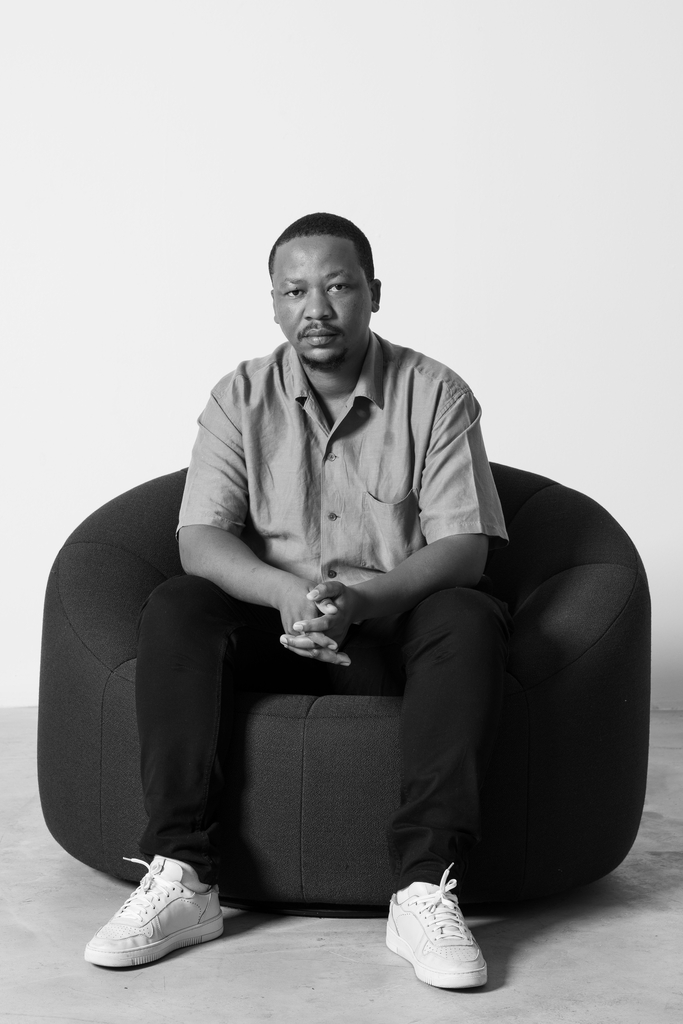
Lindokuhle Sobekwa
Lindokuhle Sobekwa (b. 1995, Katlehong, South Africa) is from a generation of South African photographers born after the first democratic elections of 1994. Through his participation in the Of Soul and Joy photography education programme in Thokoza in 2012, he realised that the medium of photography would be an essential tool to tell stories that concern and interest him.
Sobekwa exhibited for the first time in 2013 as part of a group show in Thokoza organised by the Rubis Mécénat Foundation. His photo essay ‘Nyaope’ (2014) was published in the Mail & Guardian (South Africa), in Vice magazine’s annual Photo Issue and in the daily De Standaard (Belgium).
In 2015, Sobekwa was awarded a scholarship to study at the Market Photo Workshop. That same year his series ‘Nyaope’ was exhibited in another group show, ‘Free From My Happiness’, organised by Rubis Mécénat for the International Photo Festival of Ghent in Belgium. The exhibition toured additional sites in Belgium and South Africa. A publication edited by Tjorven Bruyneel included a selection of works. Sobekwa was selected by the Magnum Foundation For Photography and Social Justice (NYC) to develop the project ‘I carry Her photo with Me’. In 2018 he received the Magnum Foundation Fund to continue his long-term project ‘Nyaope’. In 2021 Sobekwa completed a residency at A4 Foundation in Cape Town, culminating in a two-person exhibition with Mikhael Subotzky titled ‘Tell It to the Mountains’.
Sobekwa opened his first museum show in 2022 at Huis Marseille in The Netherlands, featuring the body of work ‘Umkhondo: Tracing Memory’ as part of the summer programme titled ‘The beauty of the world so heavy’. His hand-made photobook, ‘I carry Her photo with Me’, was included in African Cosmologies at the FotoFest Biennial Houston in 2020, curated by Mark Sealy.
Sobekwa’s work was shown at Goodman Gallery in March 2023 as part of the photography show ‘Against the Grain’, alongside Ernest Cole, David Goldblatt, Ruth Motau and Ming Smith. He was named an official member of Magnum Photos in 2022 and gave a lecture about his practice at TATE Modern in 2023 as part of his John Kobal Foundation Fellowship. He was also awarded the 2023 FNB Art Prize which includes a solo show at the Johannesburg Art Gallery in August 2024. His series ‘I carry Her photo with Me’ was published by Mack Books in 2024. Sobekwa was announced the 2025 Deutsche Börse Photography Foundation Prize winner, the most prestigious award for a living artist whose work has influenced international contemporary photography within the past year.
Collections include Huis Marseille, Museum for Photography; A4 Arts Foundation; University of South Africa; Sainsbury Centre; Hessel Foundation; Rubis Mercanet; Southern Collection; First Rand Bank; Art Institute of Chicago and Johannesburg Stock Exchange.
Download full CV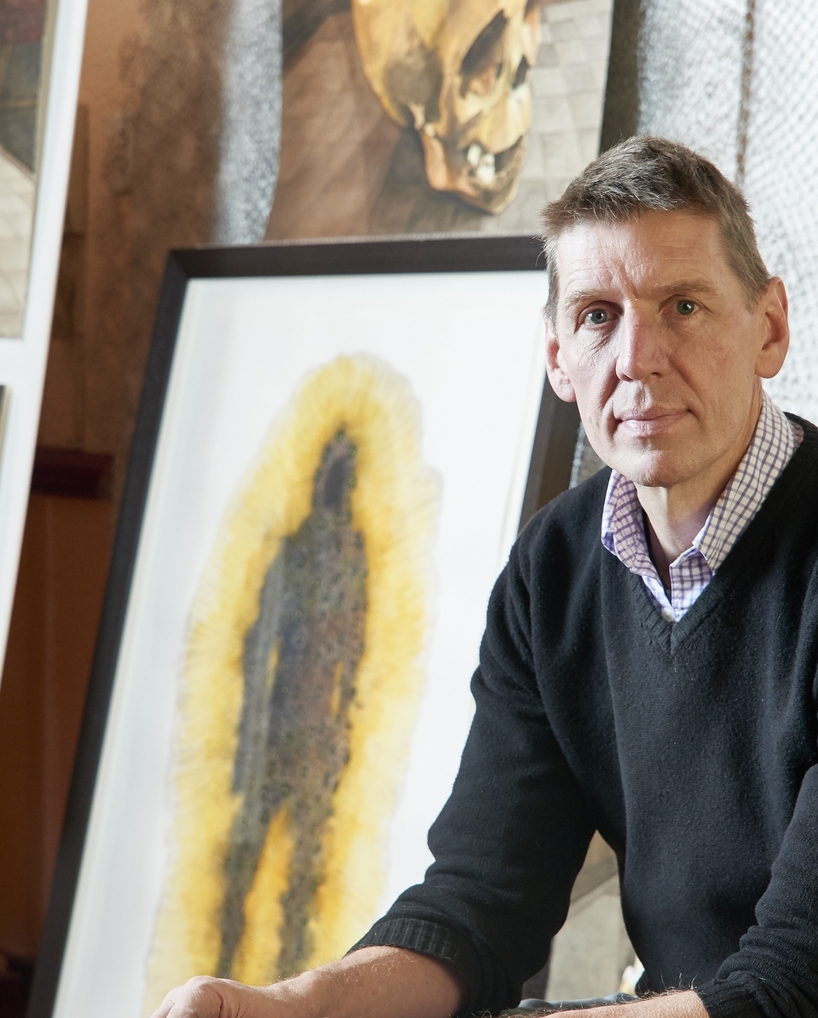
Walter Oltmann
Walter Oltmann (b. 1960, Rustenburg, North-West Province, South Africa) has an extensive record of creative work produced since the early 1980s, including a number of public commissions. Since the 1980s, he has developed an interest in the relationship between fine art and craft. In his own practice he employs hand-fabricated processes of making and has researched wire craft traditions in southern Africa. In his works, Oltmann makes connections to domestic textile practices and explores such forms of making in evoking fragility and the passage of time. He often combines aspects of decorative ornament with subject matter that seems somewhat contradictory or disturbing in relation to handcrafted embellishment. His sculptural works are executed by way of weaving in wire and using handcrafting methods that reference African and Western traditions of weaving. He is deeply interested in the influence of craft traditions in contemporary South African art.
He obtained a BA Fine Arts degree from the University of Natal, Pietermaritzburg (1981), and an MA Fine Arts degree (1985) and PhD in Fine Arts degree (2017) from the University of the Witwatersrand, Johannesburg – where he worked as a Senior Lecturer and Associate Professor in Fine Arts.
In 2001, Oltmann was awarded the Standard Bank Young Artist Award for Visual Arts. His solo exhibition which followed travelled throughout South Africa. In 2014, the Standard Bank Gallery, Johannesburg hosted his solo show In the Weave which profiled three decades of the artist’s work.
Oltmann received the Claire & Edoardo Villa Will Trust’s Extraordinary Award for Sculpture for 2022, enabling him to produce an extensive body of work, undertaken in the Villa-Legodi workshop at NIROX Sculpture Park where the works were also publicly shown. A book on his work titled In Time will be published shortly.
In his PhD thesis titled In The Weave: Textile-based Modes of Making and the Vocabulary of Handcraft in Selected Contemporary Artworks from South Africa, Oltmann examines how and to what ends contemporary artists working in South Africa have chosen to engage in practices that are common to textile-based handcraft traditions of weaving, stitching and tying. His focus is on how these artists have understood manual work and its philosophy, and how conceptualization in their creative practice is accessed through the physical act of repetitive making by hand, based particularly on those traditional textile craft practices associated with weaving.
Collections include: Iziko South African National Gallery, Cape Town, Norval Foundation, Cape Town and the Seattle Art Museum, Washington.
Oltmann lives and works in Johannesburg, South Africa.
Download full CV
Kudzanai Chiurai
Kudzanai Chiurai (b. 1981, Harare, Zimbabwe) is a multidisciplinary artist exploring notions and cycles of political, economic, and social strife present in post-colonial societies. His work interrogates urgent social issues, such as xenophobia, exile, displacement, the psychological experiences of urban spaces, as well as the Western imprint on Africa.
In 2024, Chiurai’s film We Live in Silence (Chapters 1 – 7) was on view as part of the main exhibition at the 60th Venice Biennale Stranieri Ovunque – Foreigners Everywhere, curated by Adriano Pedrosa. In 2023, photographs from the artist’s We Live in Silence series were part of A World in Common: Contemporary African Photography, at TATE Modern curated by Osei Bonsu.
In 2013, Chiurai’s Conflict Resolution series was exhibited at DOCUMENTA (13) (2012) in Kassel and the film Iyeza was one of the few African films to be included in the New Frontier shorts programme at the Sundance Film Festival.
Chiurai’s project, The Library of Things We Forgot to Remember, is built around his collecting practice which focuses on preserving archives and memorialising social and cultural history from southern Africa. The project exists in the form of an archive of materials situated in Johannesburg including vinyls, posters, paintings and more, drawn from private African collections. Each time this archive is exhibited, Chiurai invites a different librarian to interrogate the archive and curate an exhibition.
Solo exhibitions include: Genesis [Je n’isi isi], We Live in Silence, IFA, Stuttgart (2019); Madness and Civilization, Kalmar Konsmuseum, Sweden (2018); Now and Then: Guercino and Kudzanai Chiurai, Zeitz MOCAA, Cape Town (2018); and Regarding the Ease of Others, Zeitz MOCAA, Cape Town (2017).
Group shows include: FLIGHT, Malmö Konsthall, Sweden (2023); Ubuntu, a Lucid Dream, Palais de Tokyo, Paris (2020); Art/Afrique, Le nouvel atelier, Fondation Louis Vuitton, Paris (2017); The Divine Comedy: Heaven, Purgatory and Hell Revisited, Museum für Moderne Kunst, Frankfurt (2014) and travelled to the SCAD Museum of Art, Savannah (2015); Figures & Fictions: Contemporary South African Photography, Victoria and Albert Museum, London (2011); and Impressions from South Africa, 1965 to Now, Museum of Modern Art, New York (2011).
Collections include: Museum of Modern Art, New York; Hessel Museum of Art, Bard College, Annandale-On-Hudson; Pérez Art Museum Miami, Miami; Pigozzi Collection, Geneva; Walther Collection, New York; and Zeitz Museum of Contemporary Art Africa, Cape Town.
Chiurai lives and works in Harare, Zimbabwe.
Download full CV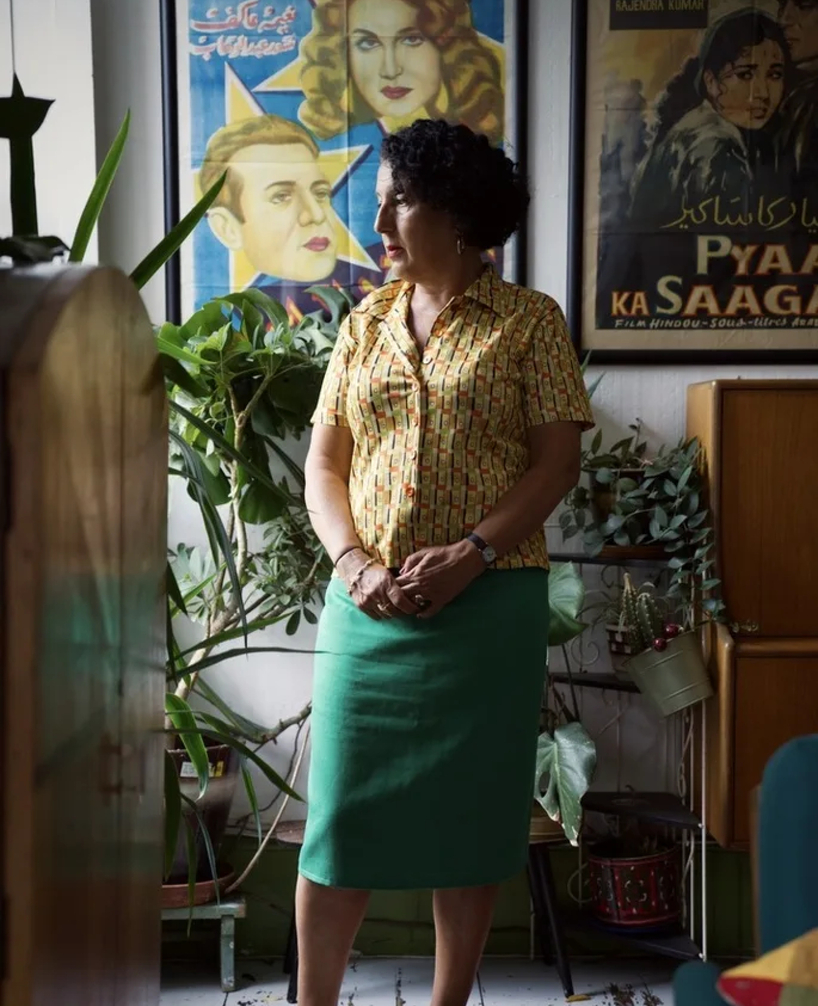
Zineb Sedira
Zineb Sedira’s (b. 1963 Paris, France) work has enriched the debate around the concepts of modernism, modernity and its manifestations in an inclusive way for over the fifteen years of her practice. She has also raised awareness of artistic expression and the contemporary experience in North Africa.
She found inspiration initially in researching her identity as a woman with a singular personal geography. From these autobiographical concerns she gradually shifted her interest to more universal ideas of mobility, memory and transmission. Full of her fascination for the relationship between mother and daughter, her vidéo Mother Tongue (2002), depicts three generations of women and raises the issue of transmission in a globalized world.
Sedira has also addressed environmental and geographical issues, negotiating between both past and future. Using portraits, landscapes, language and archival research, she has developed a polyphonic vocabulary, spanning fiction, documentary and more poetic and lyrical approaches. Sedira has worked in installation, photography, film, video and she has recently returned to object-making. Preserving and transmitting memories of the past in order to leave a legacy for the future has often been at the core of Sedira’s work.
Sedira’s work was shown in several solo exhibitions including at the Photographer’s Gallery (London, 2006), at Wapping Project (London, 2008), at New Art Exchange (Nottingham, 2009), at Pori Museum (Finland, 2009), at BildMuseets (Sweden, 2010), at Kunsthalle Nikolaj (Copenhagen, 2010), at the Palais de Tokyo (Paris, 2010), at the [mac] musée d’Art contemporain of Marseille (2010), at the Blaffer Art Museum, University of Houston, at Prefix – Institute of Contemporary Art (Toronto, 2010) and et at the Charles H. Scott Gallery in Vancouver and at Blaffer Art Museum, Houston (2013).
Her work was also shown in many group shows in institutions such as Tate Britain (London, 2002), Centre Pompidou (Paris, 2004, 2009), Mori Museum (Tokyo, 2005), Baltic Centre for Contemporary Art (Gateshead, 2005), Musée d’Art Moderne of Alger (2007), Brooklyn Museum (New York, 2007), Mathaf – Arab Museum of Modern Art (Qatar, 2010), the Contemporary Art Center (Thessaloniki, 2011) at the Tate Britain, London, UK, at the MuCEM, Musée des civilisations de l’Europe et de la Méditerrannée and the Friche de la Belle de Mai (2013), Marseille, at the Gwangju Museum of Art, South Korea, at the Centre Pompidou-Metz, France (2013), at the MMK Museum für Mordern Kunst, Germany (2014), as well as in biennials and triennials, including the Venice Biennale (2001 and 2011), the triennial for photography and video at the Institute of Contemporary Photography in New York (2003), the Sharjah Biennale (2003 and 2007) and the Folkestone Triennial (2011).
Sedira is founder of aria (artist residency in algiers), a residency program to support the development of the contemporary art scene in Algeria through international cross-cultural exchanges and collaborations.
Download full CV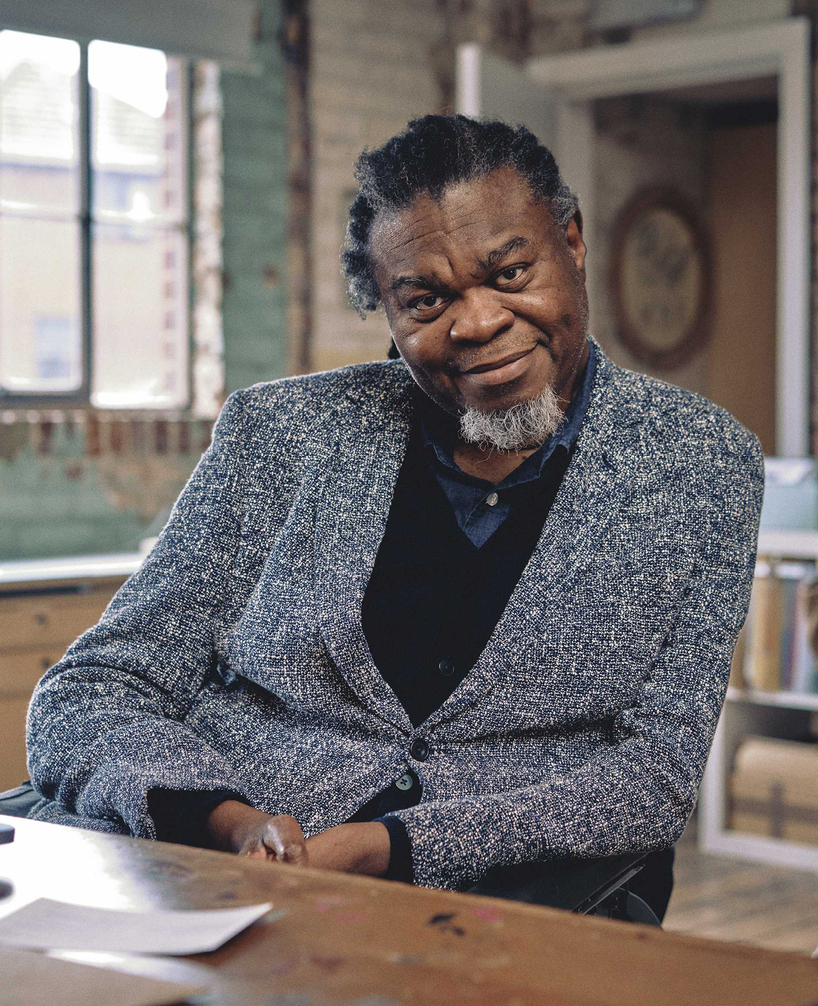
Yinka Shonibare
Yinka Shonibare (b. 1962, London, United Kingdom) studied Fine Art at Byam Shaw School of Art, London (1989) and received his MFA from Goldsmiths, University of London (1991). His interdisciplinary practice uses citations of Western art history and literature to question the validity of contemporary cultural and national identities within the context of globalisation. Through examining race, class and the construction of cultural identity, his works comment on the tangled interrelationship between Africa and Europe, and their respective economic and political histories.
In 2024, Serpentine Gallery, London UK, presented a solo exhibition of works in their Serpentine South gallery titled Suspended States. Shonibare’s work is also featured at the Venice Biennale 2024 as part of the Nigerian Pavilion, in the group show: Nigeria Imaginary.
To mark Sharjah Biennial’s 30th anniversary in February 2023, Shonibare was commissioned to create a series of new works for the exhibition. He also unveiled a new outdoor sculpture commissioned by the David Oluwale Memorial Association in Aire Park, Leeds as part of Leeds 2023.
In November 2022, Shonibare hosted the international launch of Guest Artists Space (G. A. S.) Foundation, a non-profit founded and developed by the artist. The Foundation is dedicated to facilitating cultural exchange through residencies, public programmes and exhibition opportunities for creative practitioners from around the world. The live/work residency spaces are set across sites in Lagos and a rural working farm in Ijebu, Ogun State.
A major retrospective of his work opened at the Museum der Moderne, Salzburg in the same year followed by his co-ordination of The Royal Academy Summer Exhibition, London which opened in September 2021. The survey solo exhibition, Yinka Shonibare CBE: Planets in My Head, opened in April 2022 at Frederik Meijer Gardens & Sculpture Park, Grand Rapids, Michigan followed by the unveiling in June 2022 of a major new sculptural work, Wind Sculpture in Bronze I at Royal Djurgården, Stockholm.
In 2013, he was elected a Royal Academician and was awarded the honour of ‘Commander of the Order of the British Empire’ in 2019. His installation ‘The British Library’ was acquired by Tate in 2019 and is currently on display at Tate Modern, London. Shonibare was awarded the prestigious Whitechapel Gallery Art Icon Award in 2021.
In 2010, his first public art commission ‘Nelson’s Ship in a Bottle’ was displayed on the Fourth Plinth in Trafalgar Square, London and is in the permanent collection of the National Maritime Museum, Greenwich, London. In 2008, his mid-career survey began at Museum of Contemporary Art, Sydney, travelling in 2009 to the Brooklyn Museum, New York and the Museum of African Art at the Smithsonian Institute, Washington D.C. In 2004, he was nominated for the Turner Prize.
Notable museum collections include: the Tate Collection, London; Victoria and Albert Museum, London; National Museum of African Art, Smithsonian Institute, Washington, D.C; Museum of Modern Art, New York; Moderna Museet, Stockholm; the Museum of Contemporary Art, Chicago; National Gallery of Modern Art in Rome and VandenBroek Foundation, The Netherlands.
Shonibare lives and works in London, United Kingdom.
Download full CV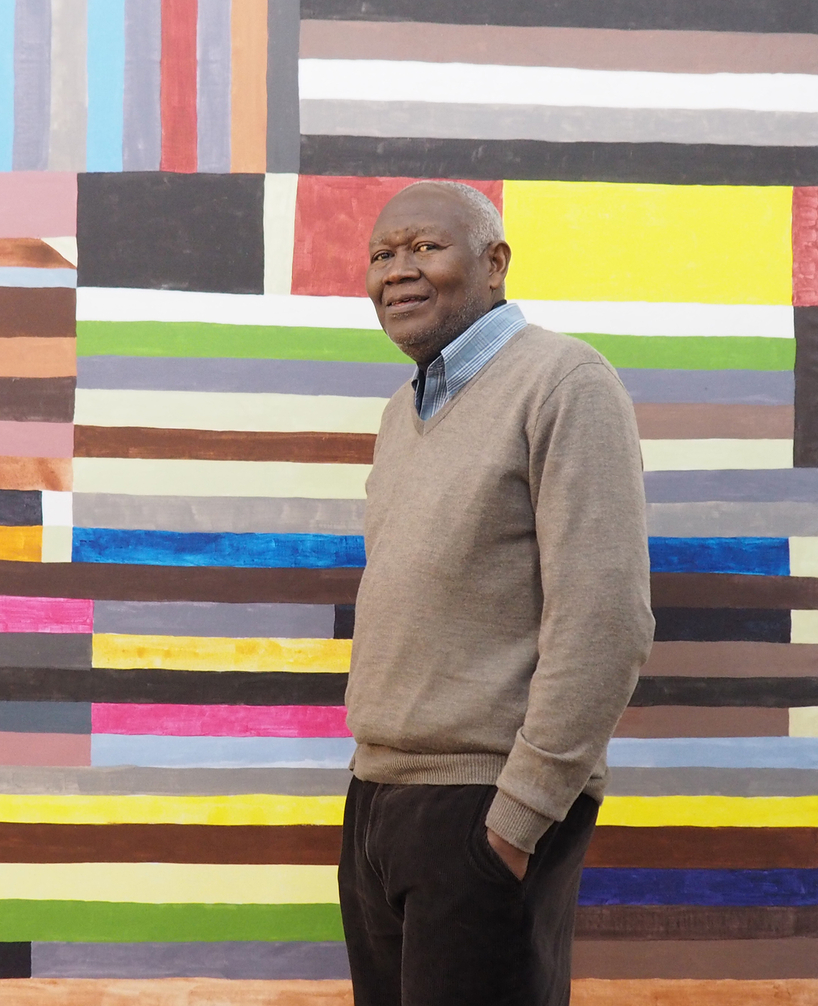
Atta Kwami
Atta Kwami (b. 1956, Accra, Ghana, d. 2021, UK) was a distinguished artist, art historian and curator, living and working between the UK and his home country, Ghana. His colourful works of vibrant geometric patterns are inspired by a wide range of influences, from Ewe and Assante cloth to jazz, the tradition of mural painting and the design of street kiosks along the roads of West-African towns. Kwami is known for expanding the notions of painting, basing his practice both in the visual world of his native Ghana and in reflections on modernism.
Atta Kwami studied, and later taught at the Kwame Nkrumah University of Science and Technology (KNUST). In 2007, Kwami received a PhD in art history, now published as _Kumasi Realism, 1951-2007: An African Modernism, in which he sought to explore past and present influences on West African art, with an emphasis on street art traditions throughout Kumasi, Ghana.
In 2021, the year he died, he was awarded the prestigious Maria Lassnig prize, which recognised later career artists deserving wider career recognition, and, in 2022, The Serpentine unveiled the final public mural commission by Kwami, ‘DzidzƆ kple amenuveve (Joy and Grace)’, which remains on view until September 2024.
This Spring, the Serpentine will publish a monograph about Kwami with Verlag der Buchhandlung Walther und Franz König, Köln supported by The Maria Lassnig Foundation and marking the first publication dedicated to examining the breadth of Kwami’s singular practice.
Kwami’s work is included in major collections around the world, including the National Museums of Ghana and Kenya; the V&A Museum, London; the National Museum of African Art, Washington, DC; The Metropolitan Museum of Art, New York; Brooklyn Museum, Brooklyn, New York.
Download full CV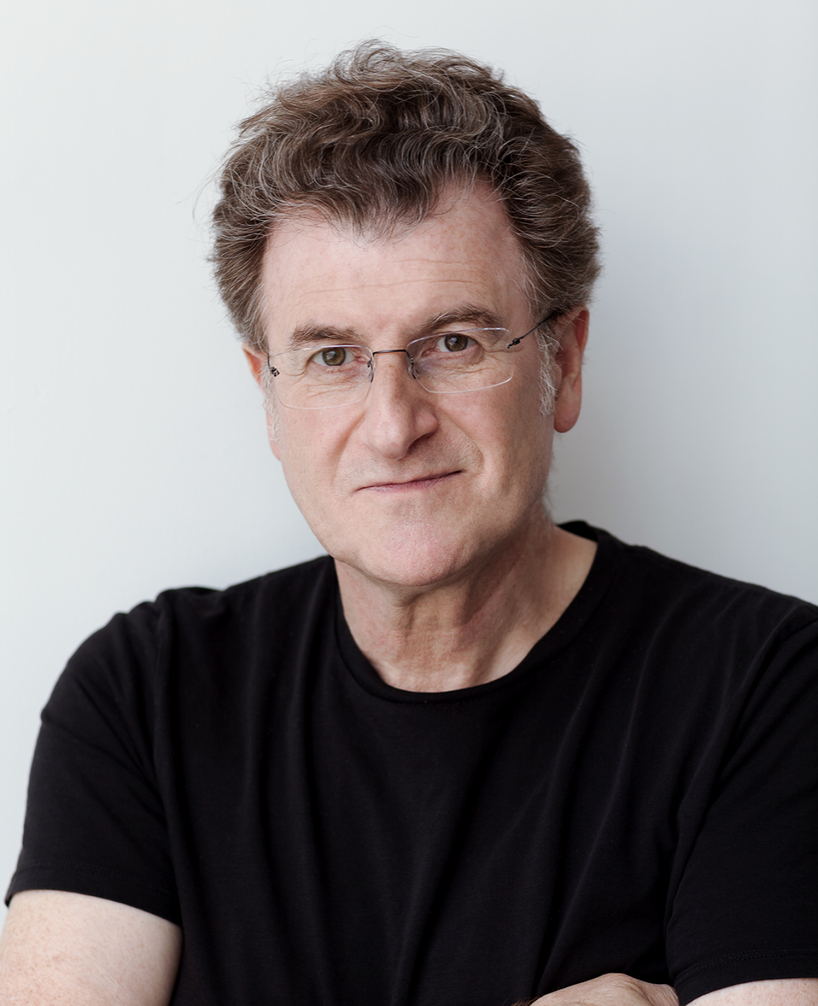
Alfredo Jaar
Alfredo Jaar (b. 1956, Santiago, Chile) is an artist, architect, and filmmaker who considers social injustices and human suffering through thought-provoking installations. Throughout his career Jaar has used different mediums to create compelling work that examines the way we engage with, and represent humanitarian crises. He is known as one of the most uncompromising, compelling, and innovative artists working today.
Through photography, film and installation he provokes the viewer to question our thought process around how we view the world around us. Jaar has explored significant political and social issues throughout his career, including genocide, the displacement of refugees across borders, and the balance of power between the first and third world.
Jaar’s work has been shown extensively around the world. He has participated in the Biennales of Venice (1986, 2007, 2009, 2013), Sao Paulo (1987, 1989, 2010) as well as Documenta in Kassel (1987, 2002).
Important individual exhibitions include The New Museum of Contemporary Art, New York (1992); Whitechapel, London (1992); The Museum of Contemporary Art, Chicago (1995); Moderna Museet, Stockholm (1994); The Museum of Contemporary Art, Rome (2005) and The Nederlands Fotomuseum (2019). Major recent surveys of his work have taken place at Musée des Beaux Arts, Lausanne (2007); Hangar Bicocca, Milan (2008); Alte Nationalgalerie, Berlinische Galerie and Neue Gesellschaft fur bildende Kunst e.V., Berlin (2012); Rencontres d’Arles (2013); KIASMA, Helsinki (2014); and Yorkshire Sculpture Park, UK (2017).
The artist has realised more than seventy public interventions worldwide and has been the subject of over sixty monographic publications. He was named a Guggenheim Fellow in 1985 and a MacArthur Fellow in 2000. His accolades include the Hiroshima Art Prize (2018) and the prestigious Hasselblad Award (2020). More recently, he received the Edward MacDowell Medal and was announced the winner of the 11th Prix Pictet in 2025.
His work can be found in the collections of The Museum of Modern Art and Guggenheim Museum, New York; Art Institute of Chicago and Museum of Contemporary Art, Chicago; MOCA and LACMA, Los Angeles; MASP, Museu de Arte de São Paulo; TATE, London; Centre Georges Pompidou, Paris; Stedelijk Museum, Amsterdam; Centro Reina Sofia, Madrid; Moderna Museet, Stockholm; MAXXI and MACRO, Rome; Louisiana Museum of Modern Art, Humlaebeck; Hiroshima City Museum of Contemporary Art and Tokushima Modern Art Museum, Japan; M+, Hong Kong; and dozens of institutions and private collections worldwide.
The artist lives and works in New York, USA.
Download full CV