Ghada Amer | You Are What You Seek


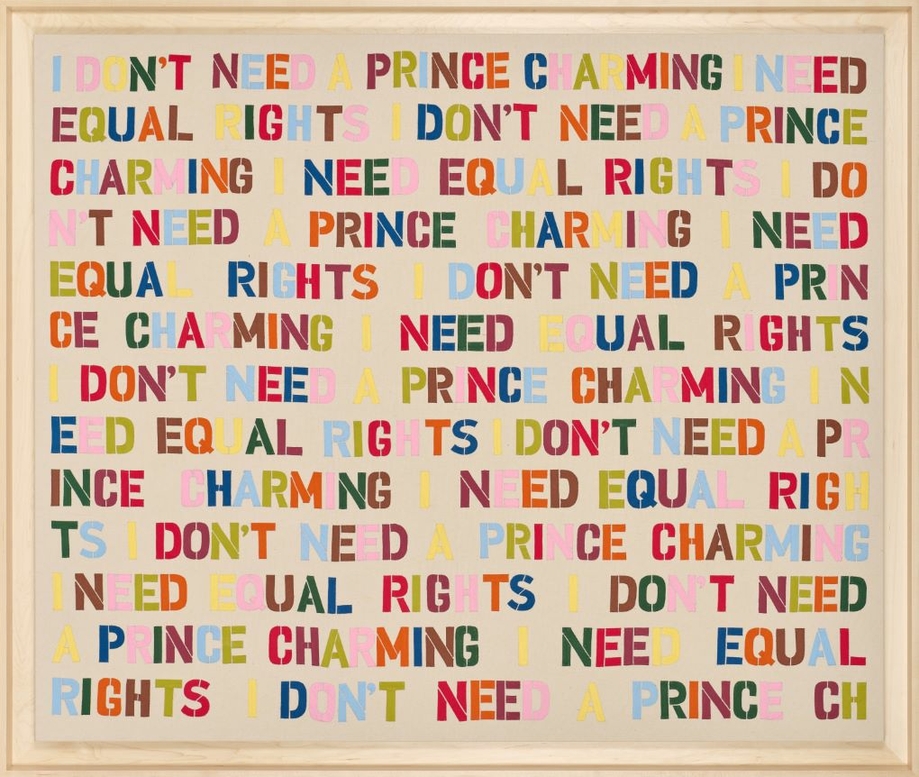
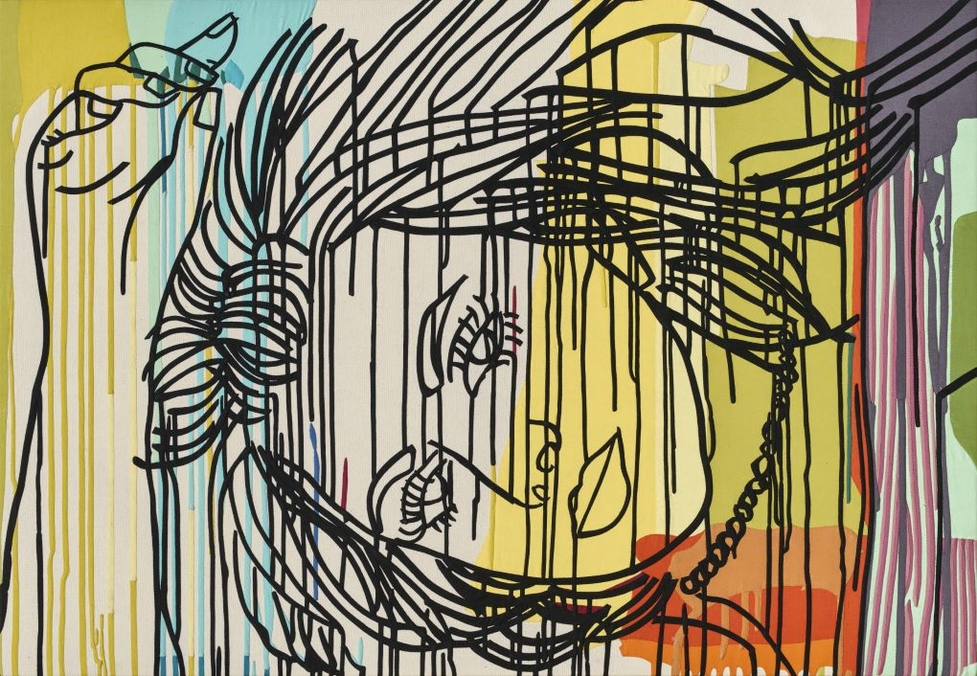
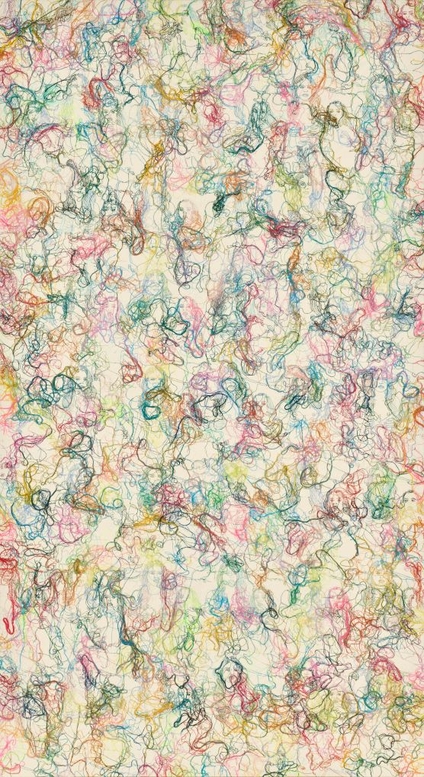
For over three decades, Ghada Amer has approached painting as a medium to be questioned, broadened and continually reimagined. Throughout her career her work has unfolded as a sustained effort to reconsider the way women appear in art and the way painting might foreground their presence. If the medium has historically been tied to mastery and a closed set of conventions, Amer treats it as a space that can be unraveled. Rather than reject painting, she stretches its borders through thread, sculpture and language, allowing it to evolve into a more porous and responsive form. This exhibition, her first solo show in Cape Town since Love is a Difficult Blue in 2018, brings together recent works in painting, embroidery, bronze and steel. Seen together, they trace a practice continually seeking new forms through which to recognise and honour the complexity of women’s lives.
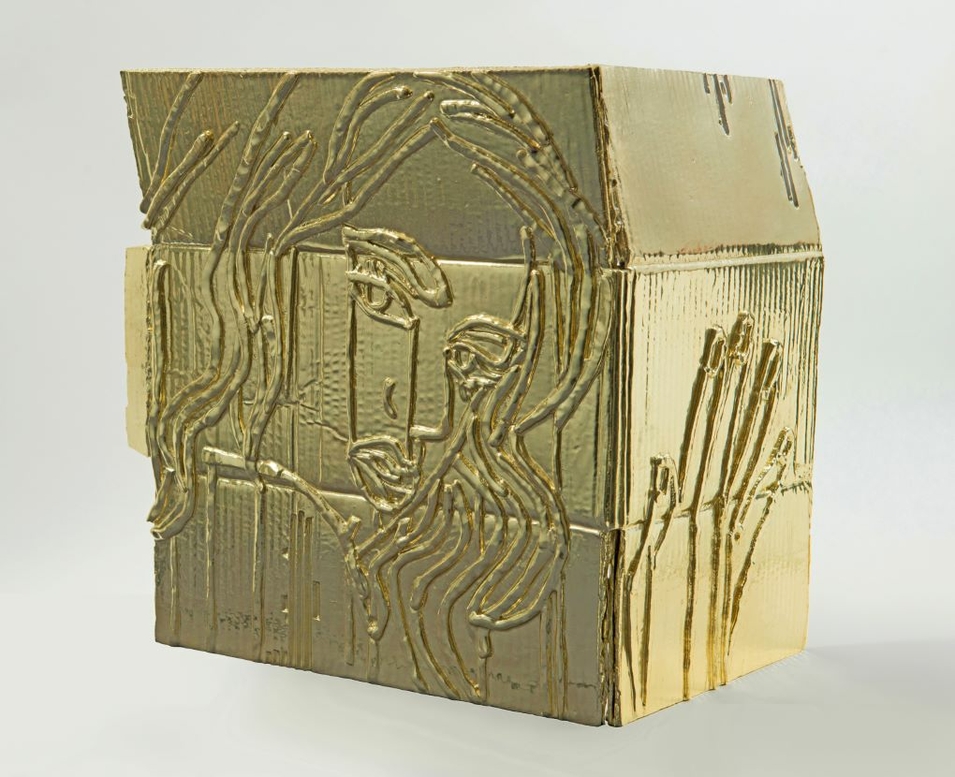
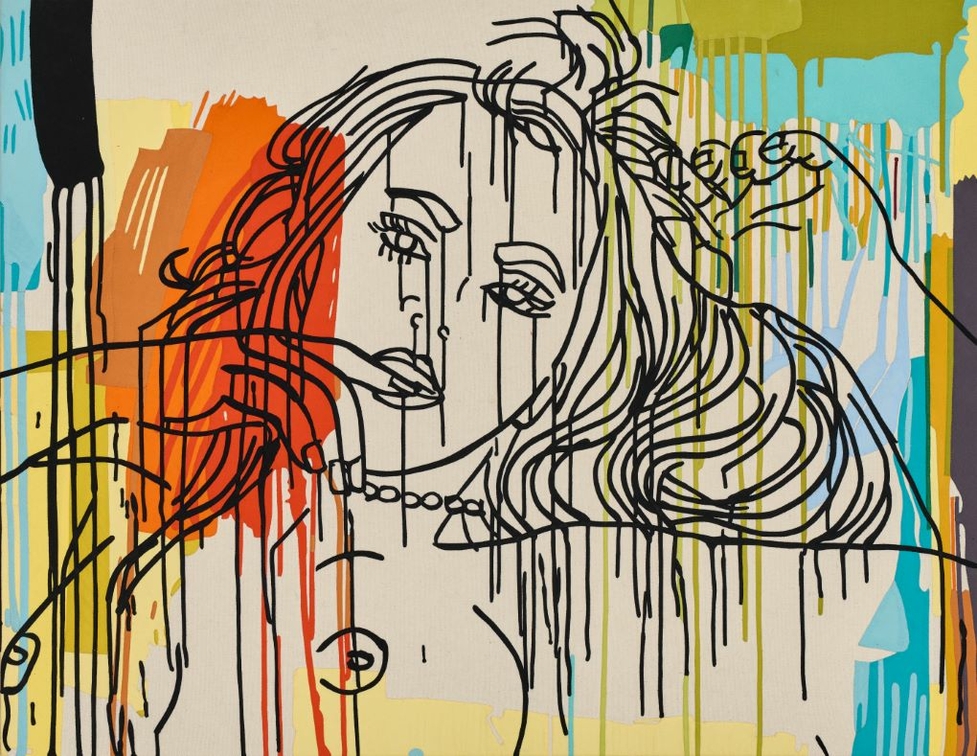
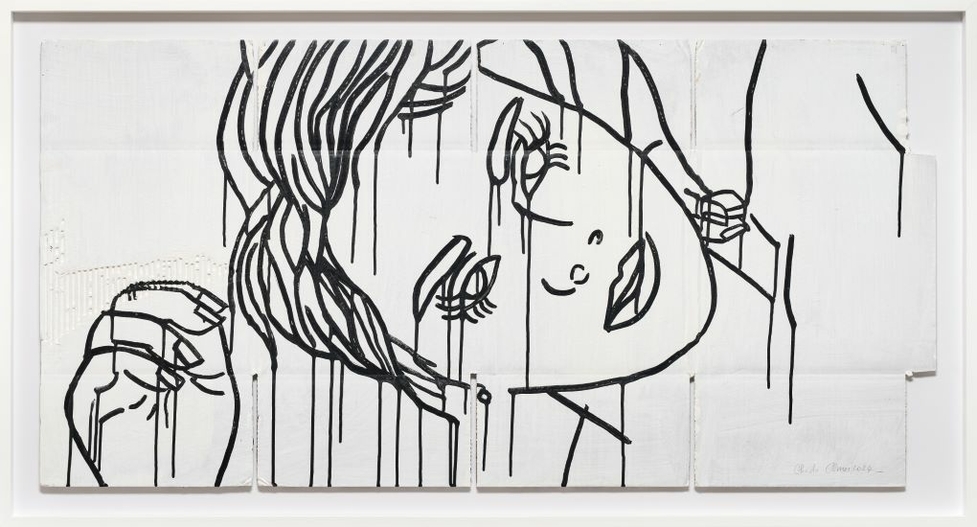
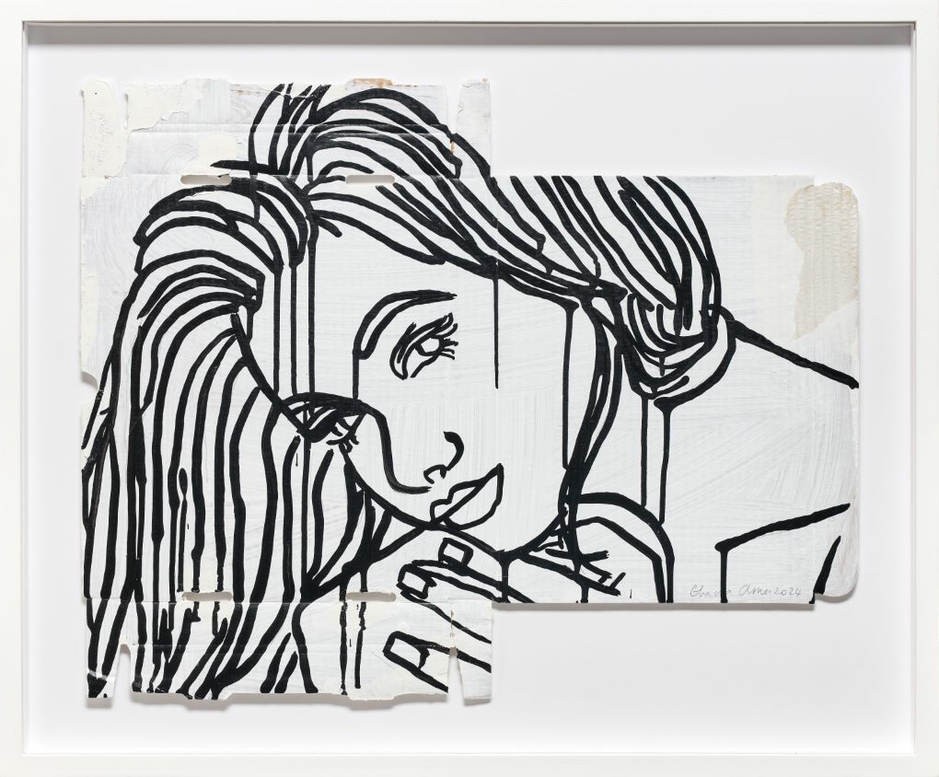
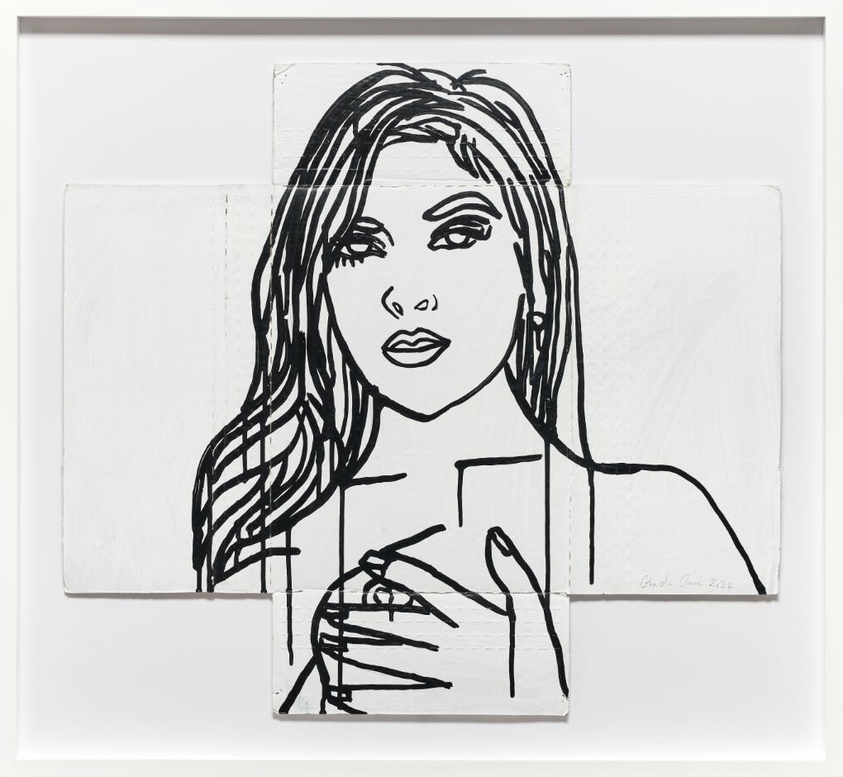
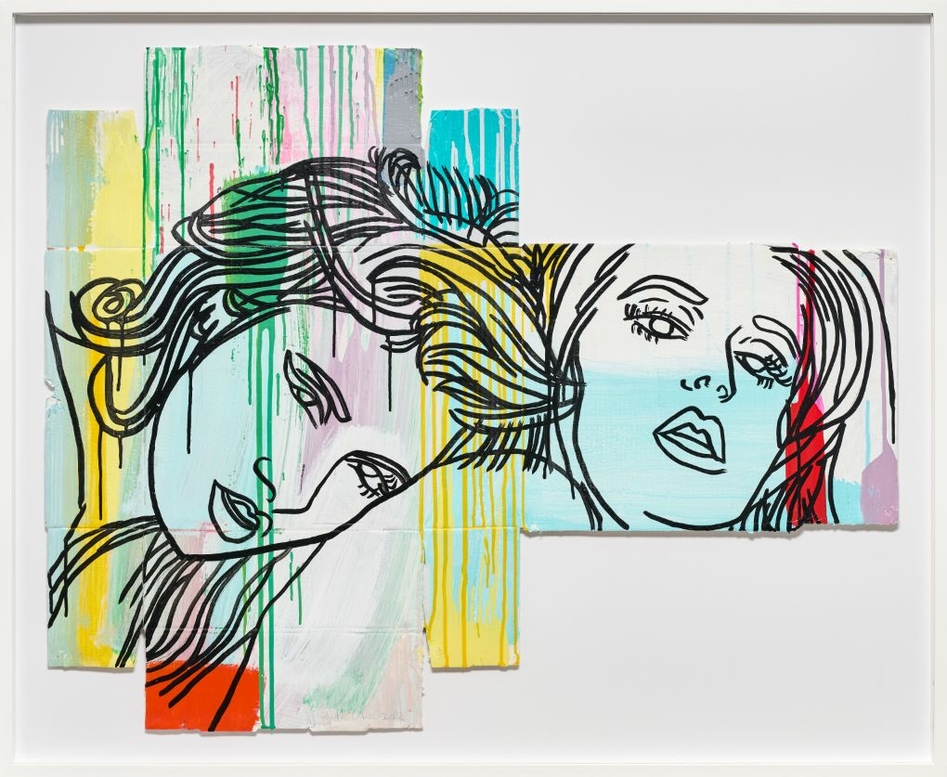
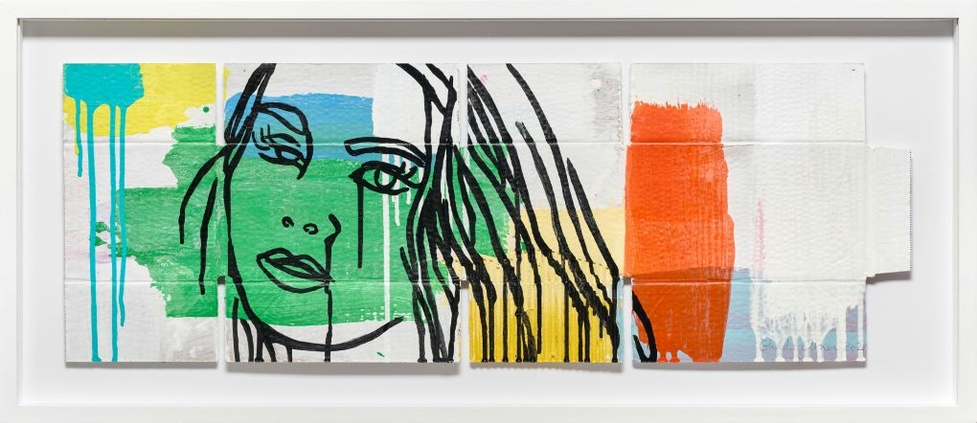
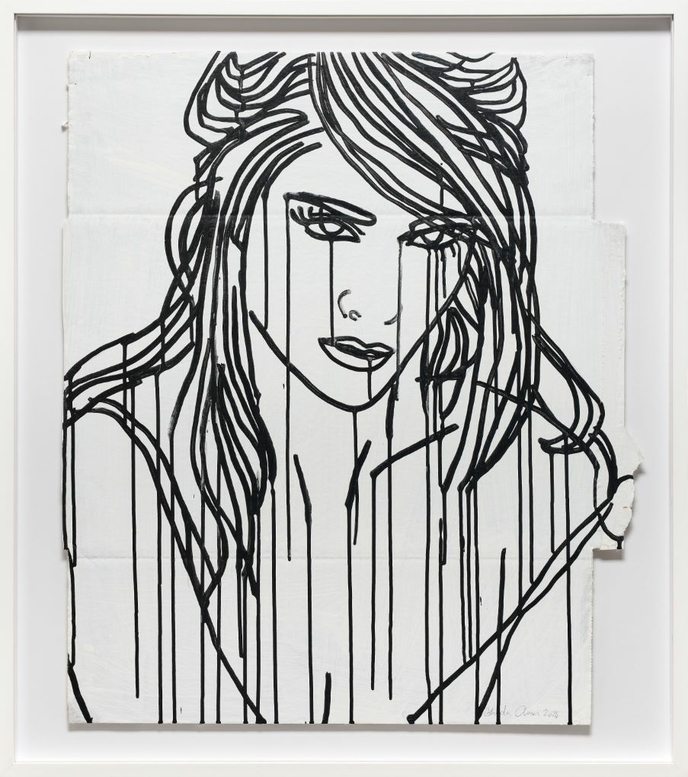
The exhibition begins with a group of recent works on cardboard which introduce a subtle yet noticeable shift in surface and tone. Amer works not on canvas but on unfolded cardboard boxes gathered from the street. Their surface carries the trace of use, showing faint folds, seams and markings beneath the drawing. Across these textured planes, Amer renders female figures in ink with a line that is both bold and firm. The ink moves across the corrugation with easy gravity, settling into the grain and catching lightly in the ridges. The figures hold to the surface with a serene presence, neither posed nor performative. Cardboard is a material of transit, yet here it becomes a place of arrival. Once used to contain and protect, it now offers a ground that holds presence openly. Any echo of the folding screen, once used to hide the female body, is gently reversed. The box has been opened fully and without ceremony. The women remain steady and self-possessed in their own company.
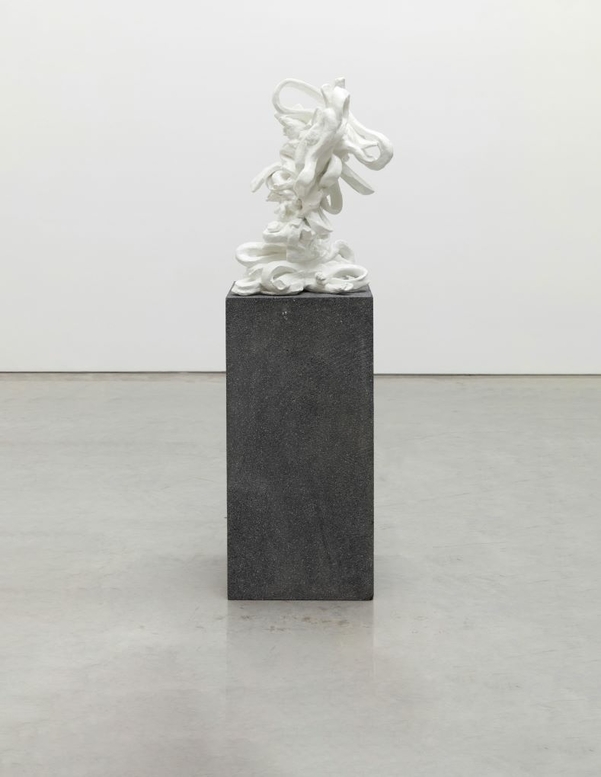
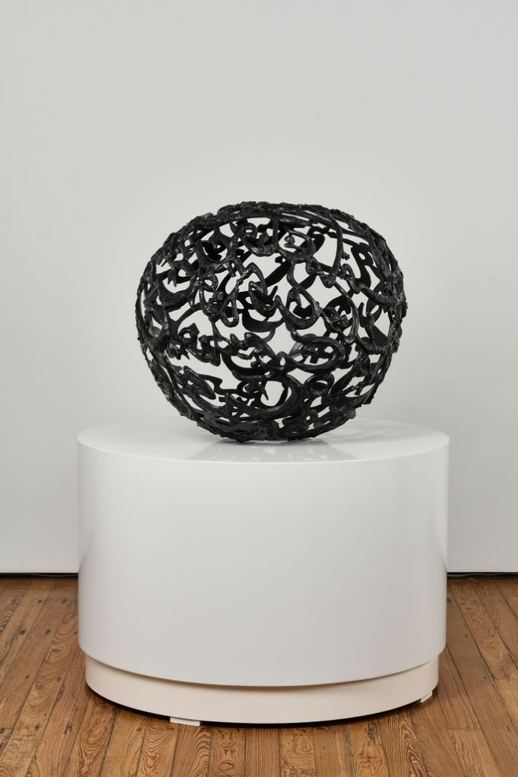
From these intimate surfaces, the figure seems to exist beyond the work itself. In GIRLS IN WHITE AND GOLD, she takes her place in space with a self-assured quietness, held in bronze with a tenderness that resists monumentalisation. Bronze, often tied to permanence or public legacy, is here used to sustain a presence that feels personal rather than declarative. The sculpture invites the viewer to move around it, as if to acknowledge that presence can never be captured from a single point of view. The act of looking becomes a gentle negotiation, shaped by awareness and reciprocity.
Artworks

About
Ghada Amer
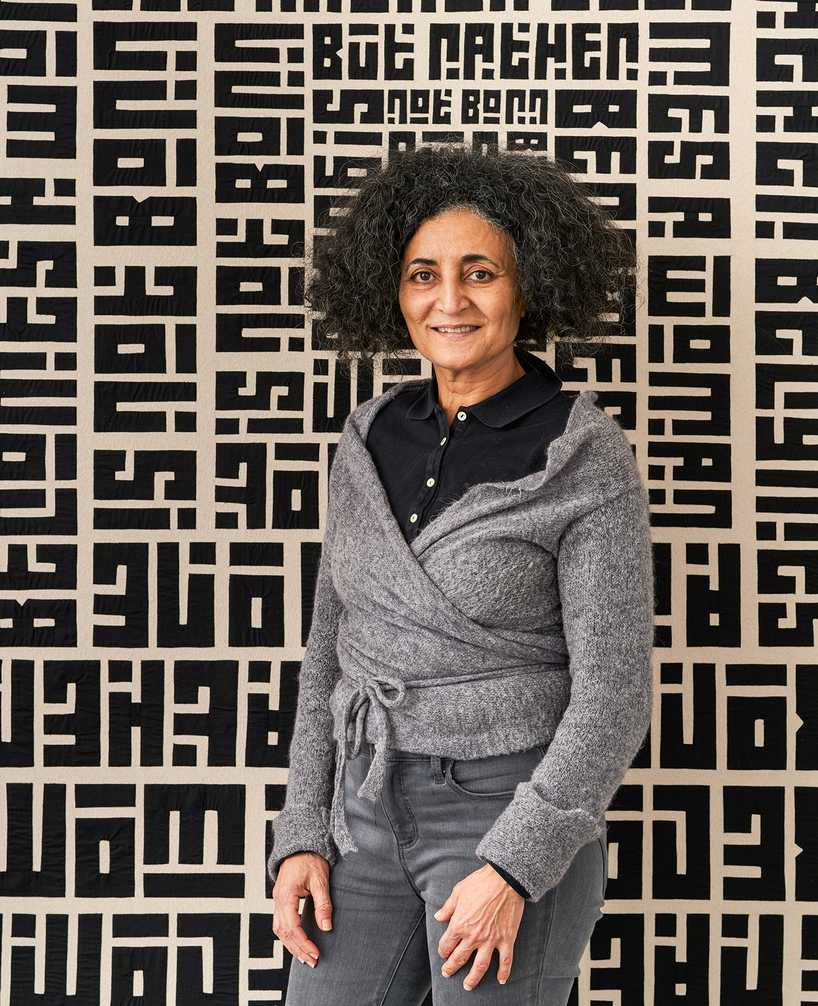
Ghada Amer was born in Cairo, Egypt in 1963 and moved to Nice, France when she was eleven years old. She remained in France to further her education and completed both of her undergraduate requirements and MFA at Villa Arson École Nationale Supérieure in Nice (1989), during which she also studied abroad at the School of the Museum of Fine Arts in Boston, Massachusetts in 1987. In 1991 she moved to Paris to complete a post-diploma at the Institut des Hautes Études en Arts Plastiques. Following early recognition in France, she was invited to the United States in 1996 for a residency at the University of North Carolina, Chapel Hill. She has since then been based in New York.
Amer’s wide-ranging practice spans painting, cast sculpture, ceramics, works on paper, as well as garden and mixed-media installations. Further, she often collaborates with her long-time friend Reza Farkhondeh. Recognising both that women are taught to model behaviors and traits shaped by others, and that art history and the history of painting in particular are shaped largely by expressions of masculinity, Amer’s work actively subverts these frameworks through both aesthetics and content. Her practice explores the complicated nature of identity as it is developed through cultural and religious norms as well as personal longings and understandings of the self.
Amer’s work is in public collections around the world including The Arab Museum of Modern Art, Doha; the Art Institute of Chicago, Chicago, IL; the Barjeel Art Foundation, Sharjah; the Brooklyn Museum of Art, New York, NY; Centre Georges Pompidou, Paris; Crystal Bridges Museum of American Art, Bentonville, AR; the Guggenheim Museum, Abu Dhabi; the Israel Museum, Jerusalem; the Samsung Museum, Seoul; among others. Among invitations to prestigious group shows and biennials—such as the Whitney Biennial in 2000 and the Venice Biennial of 1999 (where she won the UNESCO Prize), 2005 and 2007—she was given a mid career retrospective at the Brooklyn Museum of Art in New York in 2008. Multiple institutions across Marseilles, France are currently co-organising a retrospective for 2022 that will travel to the United States and Asia.
Download full CV